Seeing the Intersection of Interior Design and Technology through Exploring Taiwanese Culture—Exlusive Interview with Lin Yan-Ying
設計與科技
專家訪談
Start with the core, then move on to design.

Interviewee: Lin Yen-Ying (General Secretary Chairman of the Board of the Chinese Society of Interior Designers)
Text by: Wu Cheng-Yuan, Guo YuSyuan, Tsai Yi-Chieh
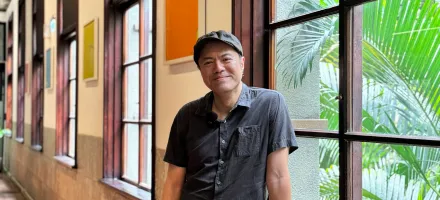
As AI technology floods into various industries like a rising tide, will interior design be replaced, or will it lead the transformation? We invited Joe Lin Yan-ying, co-founder of YPA (Yen Partnership Architects) , to share insights from his years of spatial practice and cultural reflection. He discusses the current state of interior design in Taiwan—poised between creativity and planning, serving both as a container of life and a meeting point of history and technology.
Text by: Wu Cheng-Yuan, Guo YuSyuan, Tsai Yi-Chieh
As AI technology floods into various industries like a rising tide, will interior design be replaced, or will it lead the transformation? We invited Joe Lin Yan-ying, co-founder of YPA (Yen Partnership Architects) , to share insights from his years of spatial practice and cultural reflection. He discusses the current state of interior design in Taiwan—poised between creativity and planning, serving both as a container of life and a meeting point of history and technology.
Architecture Is Not the Goal, but a Container of Life
“We are not just people who build houses,” says Lin Yen-Ying.
For him, the value of a building is not measured solely by how beautiful its design is, but by whether it can once again become a place that is used and remembered. From the scent of cypress wood in old houses in Hualien to the sound of bricks and tiles from the reopening of the Railway Museum, these are the historical traces hidden within architecture. “These old buildings are witnesses to our collective life. As long as there are people living inside, they still have life.”
For him, the value of a building is not measured solely by how beautiful its design is, but by whether it can once again become a place that is used and remembered. From the scent of cypress wood in old houses in Hualien to the sound of bricks and tiles from the reopening of the Railway Museum, these are the historical traces hidden within architecture. “These old buildings are witnesses to our collective life. As long as there are people living inside, they still have life.”
Who We Are Shapes Our Designs
Once at a lecture at the University of Tokyo, a student asked Tadao Ando, “How does one become a good Japanese architect?” He replied, “You first have to become a good Japanese person.”
This statement deeply moved Lin Yen-Ying. He says, “What about us? What does it mean to be a ‘good Taiwanese person’? What is our culture?”
In his design process, he tries little by little to approach this answer. Sometimes it is through the roof tiles of an old house, sometimes through a family’s dining habits. These details gradually piece together the living contours of Taiwanese life.
This statement deeply moved Lin Yen-Ying. He says, “What about us? What does it mean to be a ‘good Taiwanese person’? What is our culture?”
In his design process, he tries little by little to approach this answer. Sometimes it is through the roof tiles of an old house, sometimes through a family’s dining habits. These details gradually piece together the living contours of Taiwanese life.
Style Is Not Design, Memory Is
“Purity” is not minimalism, but the core left behind through layers of life.
Lin Yen-Ying is not really a believer of “style.” What matters more to him is what a person’s most comfortable state at home looks like. Is it a large living room where everyone gathers closely to chat? Or a big shared sleeping area for siblings? These childhood memories are the most genuine and, therefore, the most worthy of being preserved through design.
Lin Yen-Ying is not really a believer of “style.” What matters more to him is what a person’s most comfortable state at home looks like. Is it a large living room where everyone gathers closely to chat? Or a big shared sleeping area for siblings? These childhood memories are the most genuine and, therefore, the most worthy of being preserved through design.
As Design Meets Technology, There Are Still More Possibilities
The BIM system has indeed made architectural design more precise, but if it could take a step further, such as recommending materials, analyzing costs, or even helping the government assess whether budgets are reasonable, then it would truly be useful.
AI tools are still in their early stages, and Lin feels they are not yet fully able to support the design process. However, he also sees potential—in the future, if 3D models can be efficiently converted into 2D drawings, it could help designers save a lot of effort, especially in situations of labor shortage.
AI tools are still in their early stages, and Lin feels they are not yet fully able to support the design process. However, he also sees potential—in the future, if 3D models can be efficiently converted into 2D drawings, it could help designers save a lot of effort, especially in situations of labor shortage.
Design Is More Than Technical Drawings
“Design is not just about technique. Truly impressive design moves the heart.”
Lin says. He shares his experience with the “Design Movement on Campus.” When transforming school spaces, teachers would ask, “How many points would you give for beauty? What counts as good-looking?”
But this is not a test. The “beauty” in design cannot be quantified by scores; it is whether children can genuinely fall in love with the space as they enter the classroom.
Design has no standard answers precisely because it must address everyone’s daily life.
Amid technological progress, Lin reminds designers not to forget “feeling”—those subtle, unquantifiable aspects of life are the fundamental reason for design’s existence.
Lin says. He shares his experience with the “Design Movement on Campus.” When transforming school spaces, teachers would ask, “How many points would you give for beauty? What counts as good-looking?”
But this is not a test. The “beauty” in design cannot be quantified by scores; it is whether children can genuinely fall in love with the space as they enter the classroom.
Design has no standard answers precisely because it must address everyone’s daily life.
Amid technological progress, Lin reminds designers not to forget “feeling”—those subtle, unquantifiable aspects of life are the fundamental reason for design’s existence.
相關觀點文章推薦