
Written by / Researcher Jessica Guo
In the current context where the world faces multiple challenges such as natural resource depletion, environmental pollution, and climate change, global economies are actively seeking balanced strategies to achieve economic growth and sustainable development (United Nations Environment Programme, 2023). Taiwan also endures problems such as rising annual average temperatures and waste disposal, and the National Development Council has set "2050 Net-Zero Emissions" as a goal, making the realization of net-zero carbon emission targets an urgent priority. The global industrial supply chain has officially entered a period known as the "green elimination race," in which a frequently proposed solution is to transform the current linear economy into a circular economy (Lehmann et al., 2022). With the general enhancement of public awareness regarding environmental issues and ecological footprints, the circular economy has been recognized as an irreversible global trend (European Commission, 2019).
With the entry into the transformative wave of Industry 4.0, industries are fundamentally overturning past traditional manufacturing mindsets and applying new thinking to various stages of the product life cycle, rethinking front-end raw materials, design, markets, R&D, and production, as well as back-end sales services, and even consumer feedback on product usage. The essence of Industry 4.0 lies in driving circular economy business models within industries, helping to accelerate the circulation of resources, assets, and equipment to create new value (Rosa et al., 2019). With the aid of technology and techniques, industries can explore diversified lifestyle application scenarios while simultaneously balancing the promotion and practice of global sustainable development.
Human-Centered Design Spirit: Creating C-STONE Innovative Circular Coating
The development process of innovative materials must be tightly integrated with industrial trends and technologies, and cross-disciplinary professional knowledge and skills must be integrated under complex environmental and social issues to propose suitable solutions. Design Thinking is a human-centered design spirit and methodology that focuses on human needs and behaviors while balancing technological or commercial viability (Brown, 2008). This structured creative thinking tool helps enterprises explore solutions for various innovative issues, starting from a deep understanding of humans to excavate opportunities for future circular materials.

Figure 1: Driving the Stone Innovation Process Through Design Thinking
In 2023, the Taiwan Design Research Institute and the Stone & Resource Industry R&D Center launched a collaborative research project, introducing design thinking methods into industrial innovation to create market value for circular materials. The research preliminarily proposed a "design-driven material innovation process." Grounded in “Material Driven Design” (MDD) theory, it emphasizes placing materials at the core of the design process, distinct from traditional problem-, function-, or form-oriented approaches, letting the material itself become the starting point of the project (van Bezooyen, 2014). Through four main steps, including (1) Understanding the Material: technical and experiential characteristic analysis, (2) Creating a Material Experience Vision, (3) Manifesting the Material Experience Patterns, and (4) Designing the Material/Product Concept, this design path is applied to material innovation to enhance product functionality and added value, thereby strengthening market competitiveness.
Exploring Circular Economy Opportunities in the Stone Industry
In construction, to respond to the trends, building functions, and styles of different eras, the stone market requires highly diverse options. Taiwan's own primary stone production includes marble, limestone, serpentinite, and granite, but it lacks a sufficiently diverse variety of stone quarrying to provide for market innovation and diversified demands, relying heavily on imports instead. During processing and transportation, substantial energy is consumed due to machinery cutting, and there are risks of quarrying and processing failures along the way, often leading to losses. Therefore, operators mostly look internationally for sources with relatively lower prices. In the future, global stone production will become increasingly concentrated in a few countries, primarily China, India, Turkey, Brazil, Italy, and Spain. The output of the top ten stone nations accounts for about 83% of the world's total output (Mordor Intelligence, 2022), and the derived pollution and industrial safety issues are also very severe. Currently, besides stone quarrying and process optimization, the world is simultaneously developing new materials such as “Acrylic Solid Surface” (artificial stone) and construction method specifications (Vierra, 2021), hoping to reduce resource depletion, manufacturing energy consumption, industrial safety issues, pollution, and waste disposal problems. The Taiwan Design Research Institute cooperated with the Stone & Resource Industry R&D Center in 2024 and later linked with Techhome Technology (Lotos), further exploring how to develop a circular economy within the stone processing industry.
To understand how the practical aspects of material procurement and processing method selection are conducted, a combination of literature review and industrial expert interviews was chosen. At the early stage of the research, brand owners, industrial designers, stone experts, and plastic experts were invited for interviews to examine the supply chain workflow from R&D to sales. It was found that since material promotion relies on the combination of materials and processing methods to demonstrate application effects, relying solely on functional characteristics and applicability makes it difficult for a material release to achieve commercial success and widespread use, and to trigger meaningful user experiences (Karana, 2009). Therefore, before defining the target presentation effect, it is necessary to conduct a survey on end-user application scenarios and preferred effect preferences in order to decide on the target presentation effect. Furthermore, the combined effect of materials and processing methods still relies on planned testing and diverse recording to provide for design planning and sales promotion. Additionally, materials must have stable raw material sources and prices to calculate the potential for commercialized application.
Adding Waste Oyster Shells to Promote the Recycled Utilization of Residual Materials
When brands innovate, if they wish to reduce the risk of entering the market, they need to master target users' or consumers' product application scenarios while further referencing comprehensive data such as physical material properties, material supply sources, performance variations from combinations of materials and processing methods, and real-time supply prices. This approach reduces chemical variables of innovative materials and simplifies supply chains and mold development costs, aiming to conduct ergonomics testing with prototypes as early as possible before revising designs. Therefore, to attract industries to invest in innovative material R&D, design should be properly utilized to explore and depict user application scenarios, and cross-disciplinary experts should be invited to evaluate processing demands and innovation feasibility before further discussing how to choose a base material for modification and innovation. This study preliminarily conducted research and development in three dimensions, namely: coating prototype development, stone sludge modification, and natural pigment and calcium-containing coating experiments, to explore potential application forms of innovative materials. To understand market trends and user needs at the early stage of R&D, interior designers, product designers, and craftspeople were invited to conduct tactile and color-mixing experiments. Using three materials—serpentinite, marble, and granite—as bases mixed with color powder and waste oyster shells, a natural calcium-containing material, troweling techniques were applied to trial-coat shopping space walls. This was done to perform post-mixing color preference analysis, analysis of differences from existing commercially available coating choices, procurement considerations, and future application scenario ideation. This perfected the first stage of application scenario disassembly and problem definition in the "design-driven material innovation process." Through four workshops, raw material R&D directions were adjusted and the operational tactile experience was explored, further refining the coating prototype.

Figure 2: Non-Toxic and Eco-Friendly Circular Coating C-STONE with Various Color-Mixed Pigments
(Source: Lotos, Taiwan Design Research Institute)

Figure 3: Innovative Material Application Testing Workshop
(Source: Taiwan Design Research Institute)
Eco-Friendly Circular Coating C-STONE Passing National Standard Inspection
The workshops provided actual walls for designers to personally experience material characteristics and tactile sensations, and to observe color changes after letting it stand for a period of time. It was found that after the three base materials were mixed and used, color differences during drying were highly noticeable. The particle mixing size differences among the bases and the mixed oyster shell particles all influenced the texture variations of the finished product. Natural materials also exhibit instability in color transitions after drying. Therefore, this study will reference user feedback to further adjust material proportions and formulas, making preparations before entering market testing. Among them, the marble sludge circular coating passed the CNS8082 inspection for thin-coat textured decorative materials for indoor use in January 2024. Since up to 50% of the components in C-STONE come from the sludge of Hualien stone factories, this not only solves the issue of utilizing stone residual materials but also provides a high-value reuse solution for stone sludge. Because the raw materials come from local areas in Taiwan, it also helps reduce carbon emissions during transportation.

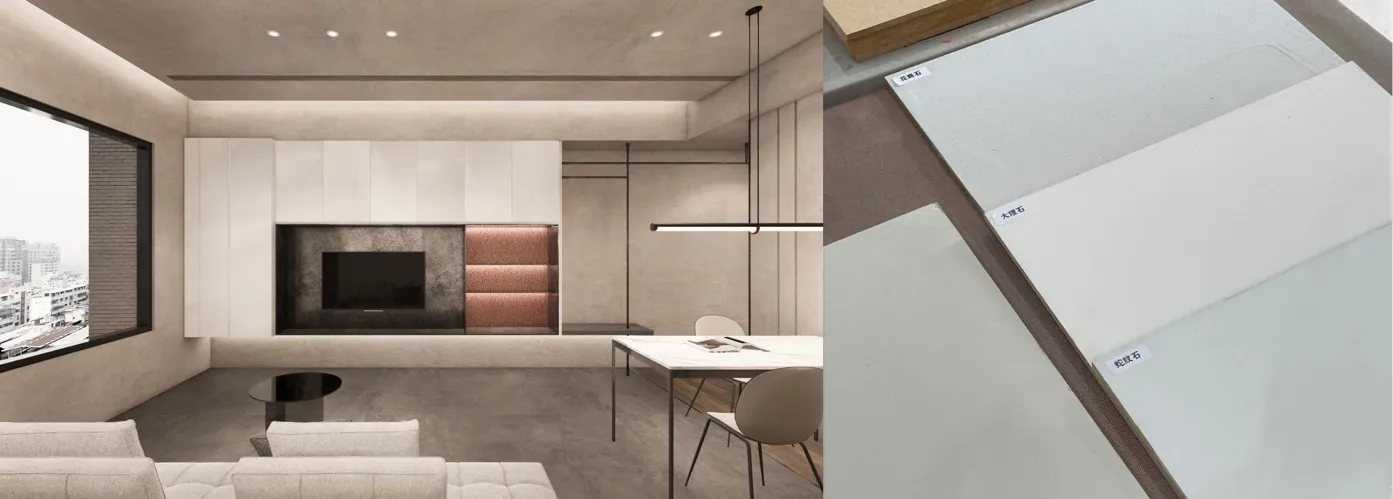
Figure 4: Simulation of Application of the Project’s Circular Coating to Old Objects
(Source: AKAMU)
Stone is frequently used to decorate floors and walls, but it is expensive and heavy. This study will continue to explore potential material circulations that can be developed within the stone processing industry, allowing stone to return to architecture and interior design in a lighter and more creatively free form, reducing the quarrying and consumption of other materials, and allowing more users to integrate the concept of circular sustainability into their daily lives.
*For further cooperation, please contact:
Researcher Jessica Guo, Design R&D Section, Taiwan Design Research Institute
Email: jessica_guo@tdri.org.tw
-
United Nations Environment Programme. (2023). Annual Report 2022. https://wedocs.unep.org/bitstream/handle/20.500.11822/41679/Annual_Report_2022.pdf?sequence=3
-
Lehmann, C., Cruz-Jesus, F., Oliverira T. & Damásio, B. (2022). Leveraging the circular economy: Investment and innovation as drivers. Journal of Cleaner Production, 360.https://doi.org/10.1016/j.jclepro.2022.132146
-
European Commission. (2019). Report on the Implementation of the Circular Economy Action Plan. https://doi.org/10.1259/arr.1905.0091
-
Rosa, P., Sassanelli, C., Urbinati, A., Chiaroni, D., & Terzi, S. (2019). Assessing relations between Circular Economy and Industry 4.0: A systematic literature review. International Journal of Production Research, 29(3), 300-313. https://doi.org/10.1080/00207543.2019
-
Brown, T. (2008, June). Design Thinking. Harvard Business Review. https://hbr.org/2008/06/design-thinking
-
van Bezooyen, A. (2014) Materials Driven Design. In E. Karana, O. Pedgley and V. Rognoli (Eds.), Materials Experience: Fundamentals of Materials and Design (pp. 277- 286). Butterworth-Heinemann.
-
Mordor Intelligence. (2022). Stone and Tile Adhesives and Sealants Market Size & Share Analysis - Growth Trends & Forecasts https://www.mordorintelligence.com/industry-reports/stone-and-tile-adhesives-and-sealants-market
-
Karana, Hekkert, & Kandachar, . (2009). The Design-driven Material Innovation Methodology: Conference Paper e: Systems & Design: Beyond Processes and Thinkin https://www.researchgate.net/publication/305726362_The_Design-driven_Material_Innovation_Methodology