
Written by / Researcher Tzu-Hsin Hsieh, Researcher Yi-Hsuan Kuo
Case Background
The Taiwan Design Research Institute (hereinafter referred to as TDRI) and the Precision Machinery Research and Development Center (hereinafter referred to as PMC) extended the workshop co-creation framework from their 2022 collaboration. Through human-machine design investigation and research, they established a design optimization demonstration based on end-user needs (see Figure 1).
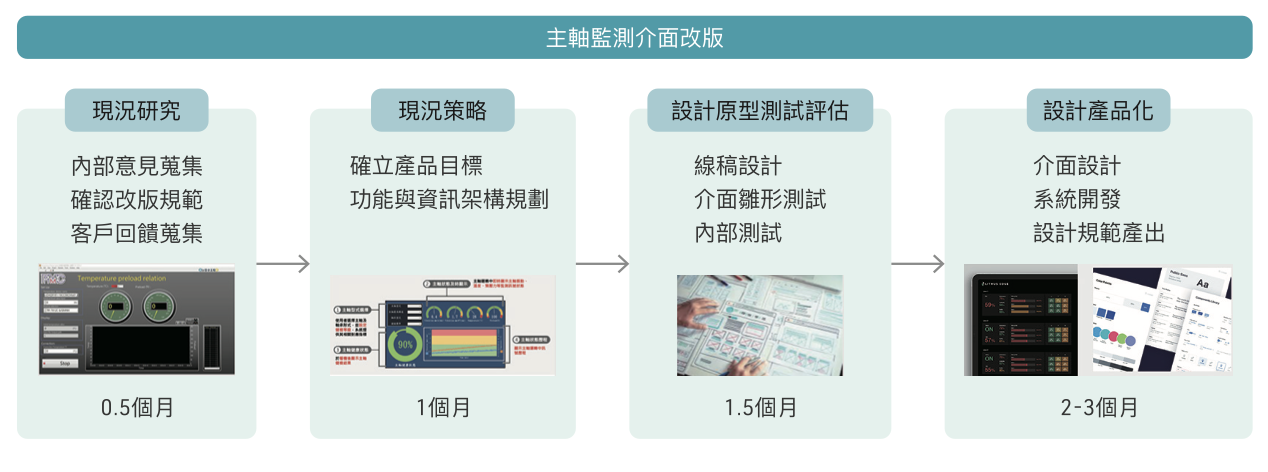
Figure 1: Co-Creation Framework for Manufacturing System Design
(Source: Taiwan Design Research Institute)
In response to the manufacturing transformation needs of domestic small and medium enterprises, PMC has in recent years provided industries with integrated hardware and software system solutions through the R&D of inspection and analysis technologies. This allows the R&D and manufacturing processes to be grasped more precisely, reducing unnecessary waste and thereby enhancing overall capacity and efficiency.
This project introduces the design R&D process to optimize the smart manufacturing "Spindle Monitoring System." Through expert interviews and interviews with spindle R&D manufacturers, it understands the application methods of key indicators and defines the system architecture and interface design framework, making the overall usage workflow align closely with the end-user needs of businesses.
Co-Creation Process
Based on the research methodology and framework of introducing design into industrial innovation, this project divides the co-creation process into five phases (as shown in Figure 2): (1) Re-design: Topic Focusing, (2) Discover: Current Situation Research, (3) Define: Design Strategy, (4) Develop: Design Prototype, and (5) Deliver: Design Productization. This study achieved the design and development of the Spindle Monitoring System through a three-party co-creation with Azul Design and PMC. The design co-creation approaches for each phase are described below:
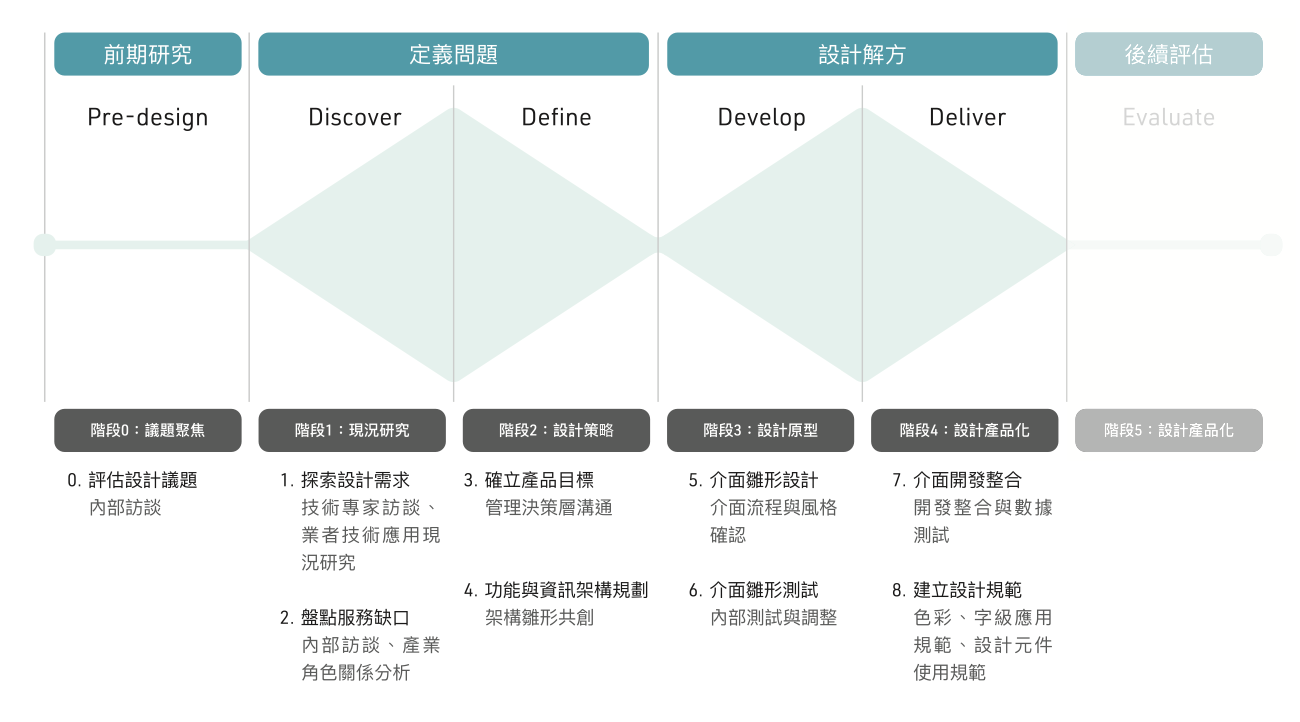
Figure 2: Co-Creation Process of the Spindle Monitoring System
(Source: Taiwan Design Research Institute)
(1) Re-design: Topic Focusing
Through internal interviews with PMC's management level and R&D departments, the team combed through existing system planning ideas, technical conditions, and the expected benefits desired from promoting this technical system, helping the team focus on the design topic.
(2) Discover: Current Situation Research
Through interviews with technical experts and businesses, the current application status and demands of this inspection technology were understood. Combined with internal interviews and desktop research results, this deeply examined various key roles in the industry to help define the development positioning of this system.
(3) Define: Design Strategy
Grounded in the foundation of the current situation research and through the re-definition of problems, the development goals for designing the Web-version monitoring dashboard were communicated with the management decision-making level and the design team (as shown in Figure 3). These included: highlighting spindle health status, visualizing historical records, and providing abnormal state prompts and troubleshooting recommendations, so as to facilitate the output of the preliminary system functional architecture.
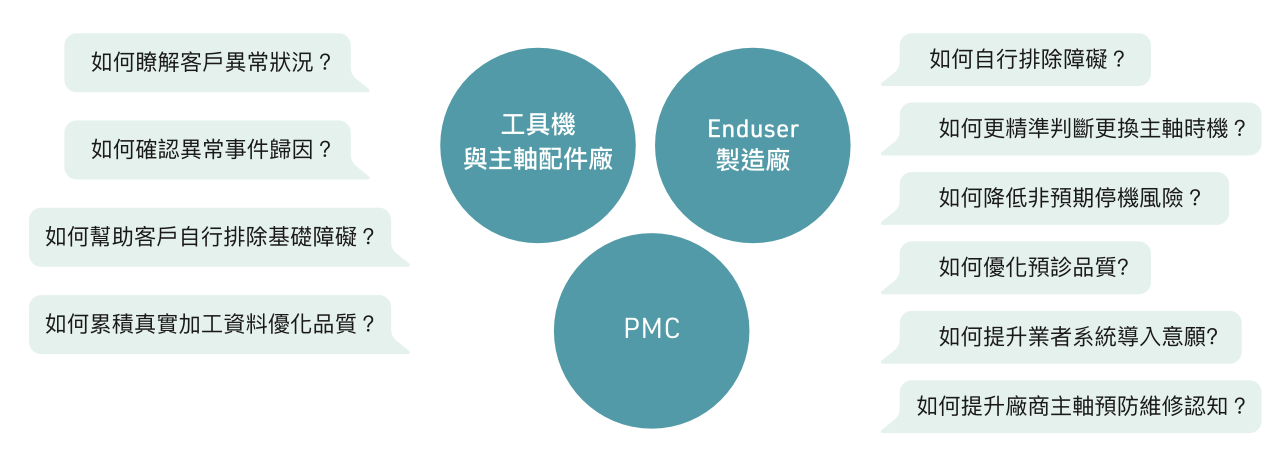
Figure 3: Design and Development Goals of the Spindle Operation Monitoring System and the Three Stakeholder Groups (Source: Taiwan Design Research Institute)
(4) Develop: Design Prototype
Through the drawing of interface wireframe flows, the system functions and usage workflows were combed with the team. Auxiliary functions and page designs were brainstormed based on the usage workflows, and adjusted through internal testing to match workflows that better suit the application scenarios.
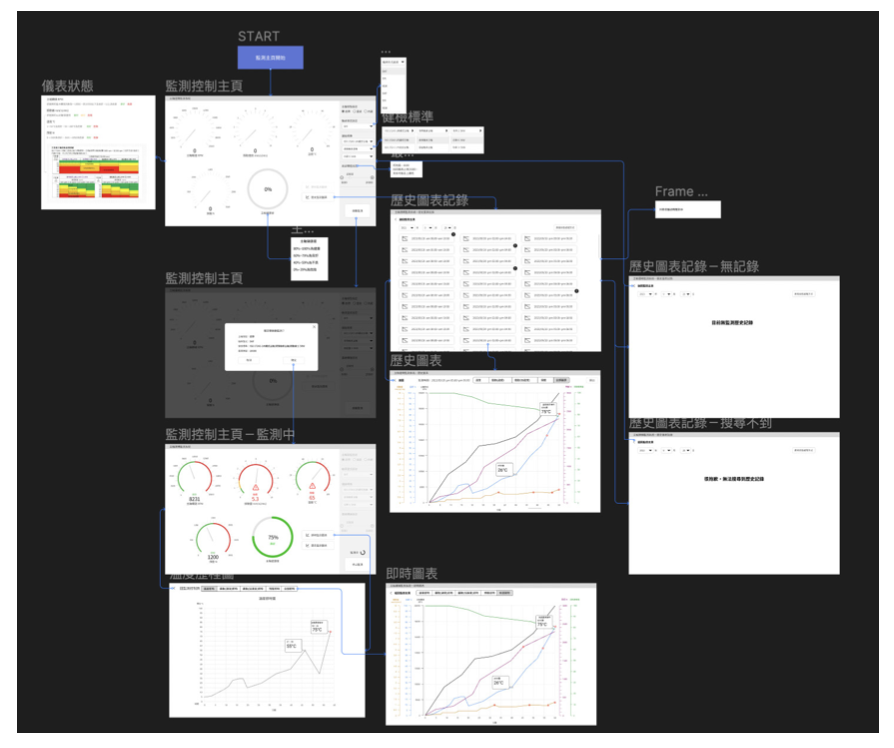
Figure 4: Interface Workflow Diagram of the Spindle Operation Monitoring System (Source: Taiwan Design Research Institute)
(5) Deliver: Design Productization Phase
Interface design and development were integrated to ensure that chart designs can satisfy data updating conditions and requirements. Relevant design specifications were compiled to serve as reference standards for subsequent productization reproduction and customization.
Outcomes
From the combing of professional manufacturing knowledge to target audience research, this project developed design and development goals from the demand side, satisfying the needs of industrial stakeholders (machine tool/spindle accessory factories, manufacturing factories) and PMC itself. Through the research foundation and collaboration with Asuredesign to introduce UI/UX design, the value of forward-looking R&D technology could be integrated into products that are easier and better to use, thereby diffusing more effectively into the industry (as shown in Figure 5).
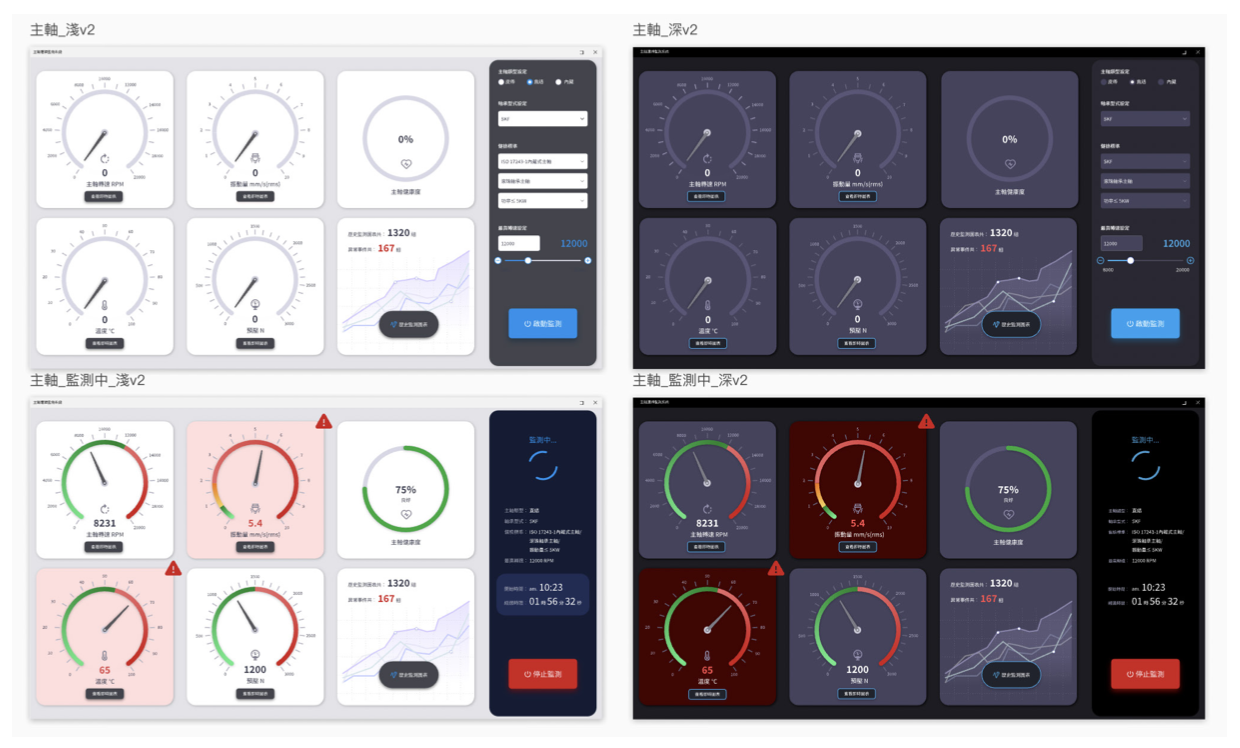
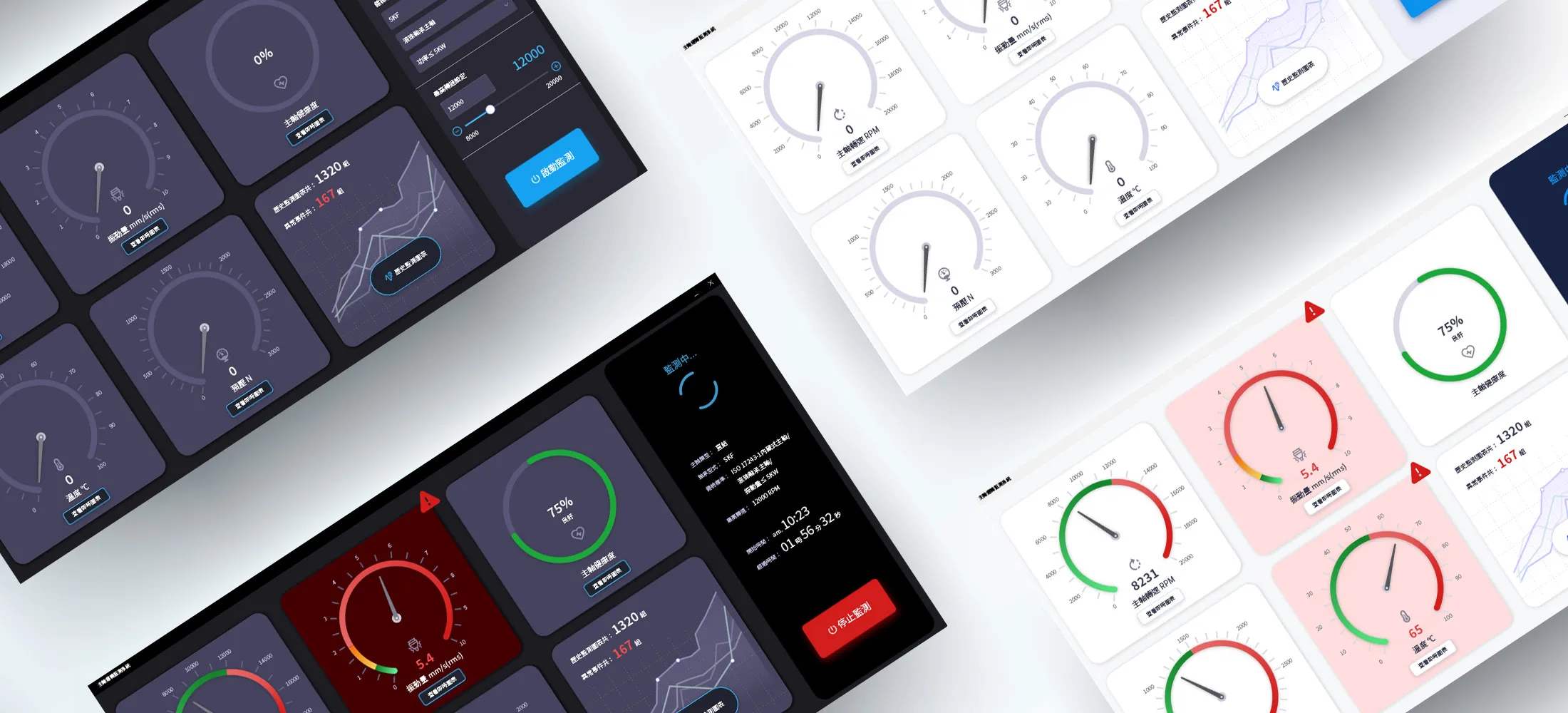
Figure 5: Interface Schematic of the Spindle Operation Monitoring System (Source: Taiwan Design Research Institute)
This article is adapted from Design and Technology: Digital Transformation and Trend Analysis (TDRI R&D 2023 Vol.2). If you wish to obtain the complete content of the report, please refer to the E-book purchasing channels:
- Design and Technology: Digital Transformation and Trend Analysis (TDRI R&D 2023 Vol.2) https://ebook.hyread.com.tw/bookDetail.jsp?id=360573
- Design and Technology: The Research and Practice of Interdisciplinary Integration Driven Innovation (TDRI R&D 2022 Vol.1) https://ebook.hyread.com.tw/bookDetail.jsp?id=360575