Written by / Design R&D Team Researchers: Una Chiu, Yan-Chun Lin
This article explores how "Design x AI Technology" landed in special education scenes in 2025. Through collaboration with the School of Occupational Therapy, College of Medicine, National Taiwan University, a gamified teaching material based on Webcam and skeleton recognition technology was developed, and field validation was completed across three special education institutions in Taiwan. The research results indicate that this solution can effectively improve body control accuracy and classroom participation willingness among students in different functional groups, while reducing the burden of demonstration for teachers, providing a practical digital transformation solution for individualized education.
Design x AI Technology, Co-creating Inclusive Education
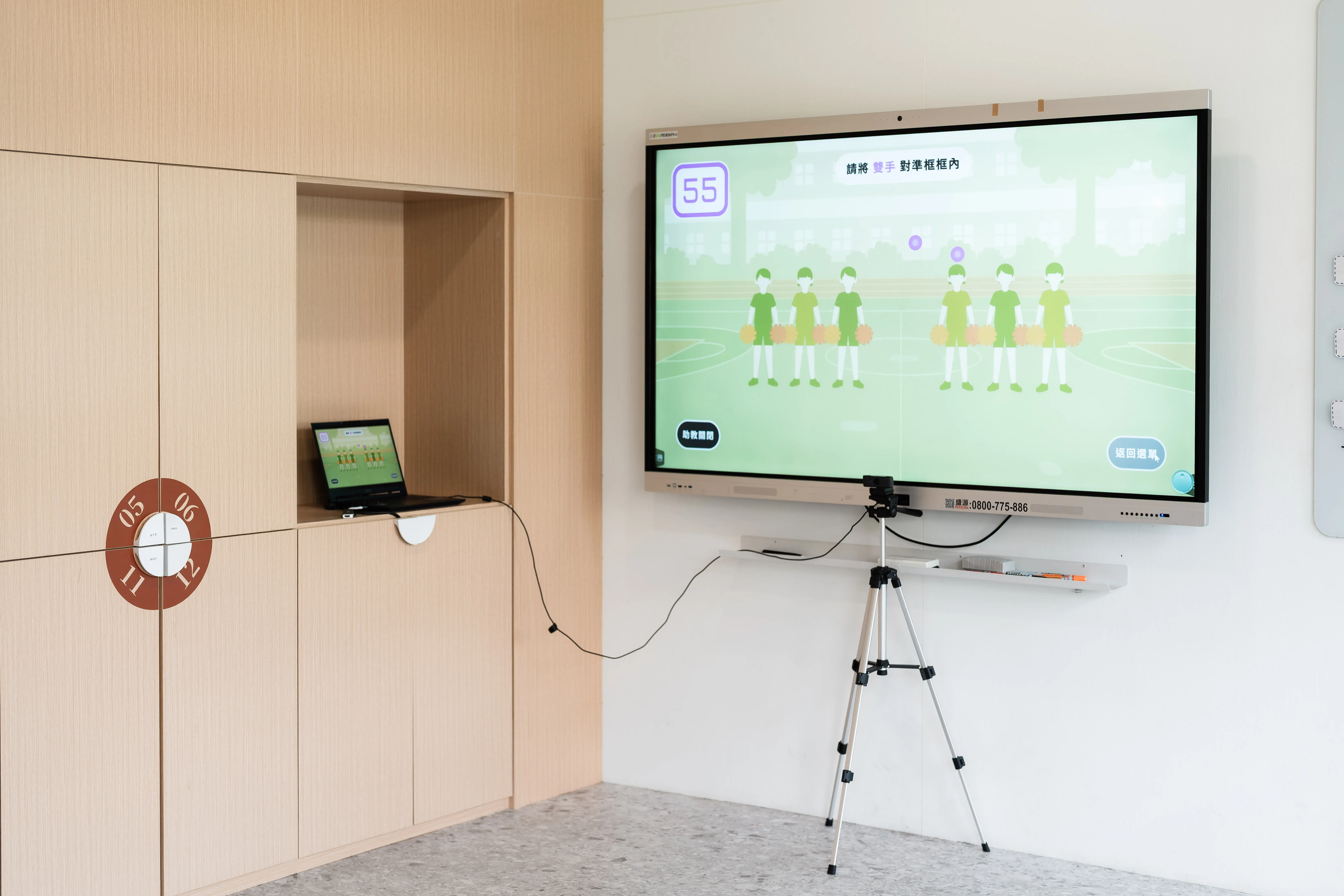
Driven by design innovation, the introduction of technology into school education is accelerating. In 2025, we joined hands with Moondream Reality and professors from the School of Occupational Therapy, College of Medicine, National Taiwan University to officially introduce interactive learning games into special education classrooms. Using Webcams paired with AI model skeletons for recognition, functional movements are integrated into daily scenarios to create innovative teaching materials that are both interesting and individualized. This achievement was implemented for field experience on September 12, September 19, and September 26, 2025, at Yunlin Chung Der Junior High School, Special Education School Affiliated with NTTU, and Taipei Jinhua Junior High School respectively, demonstrating new possibilities for technology landing in special education.
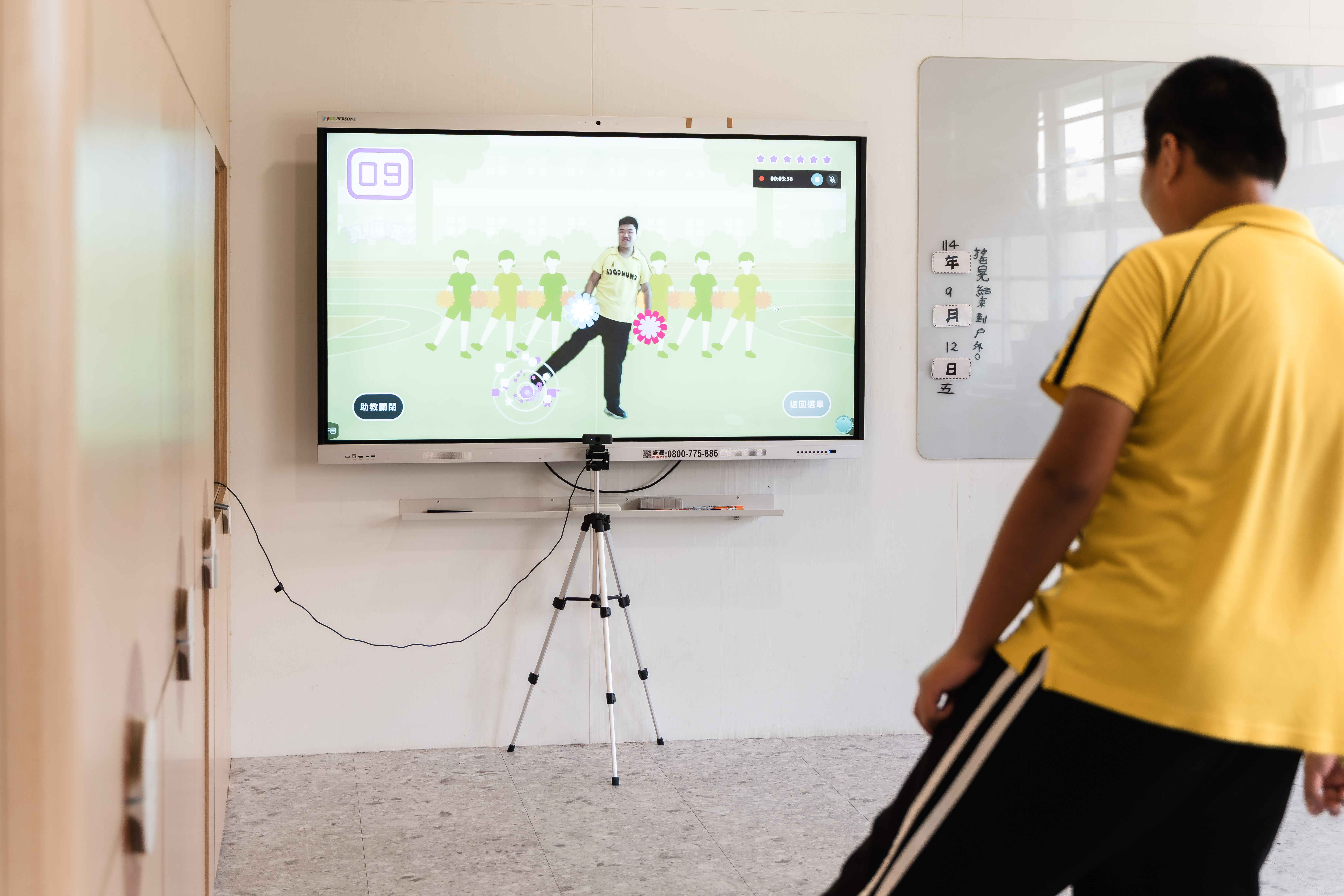
Utilizing skeleton recognition technology, the system can detect students' movement completion in real-time and designs multi-level challenges in the game to help students improve the accuracy of their physical performance step by step. Concurrently, 3D character guidance and learning modes are incorporated, using demonstration, text, and visual trajectory guidance to assist students in quickly understanding movement contents and to reduce the burden of teaching demonstrations for teachers.
Physical Training as a Key Element for Independent Living
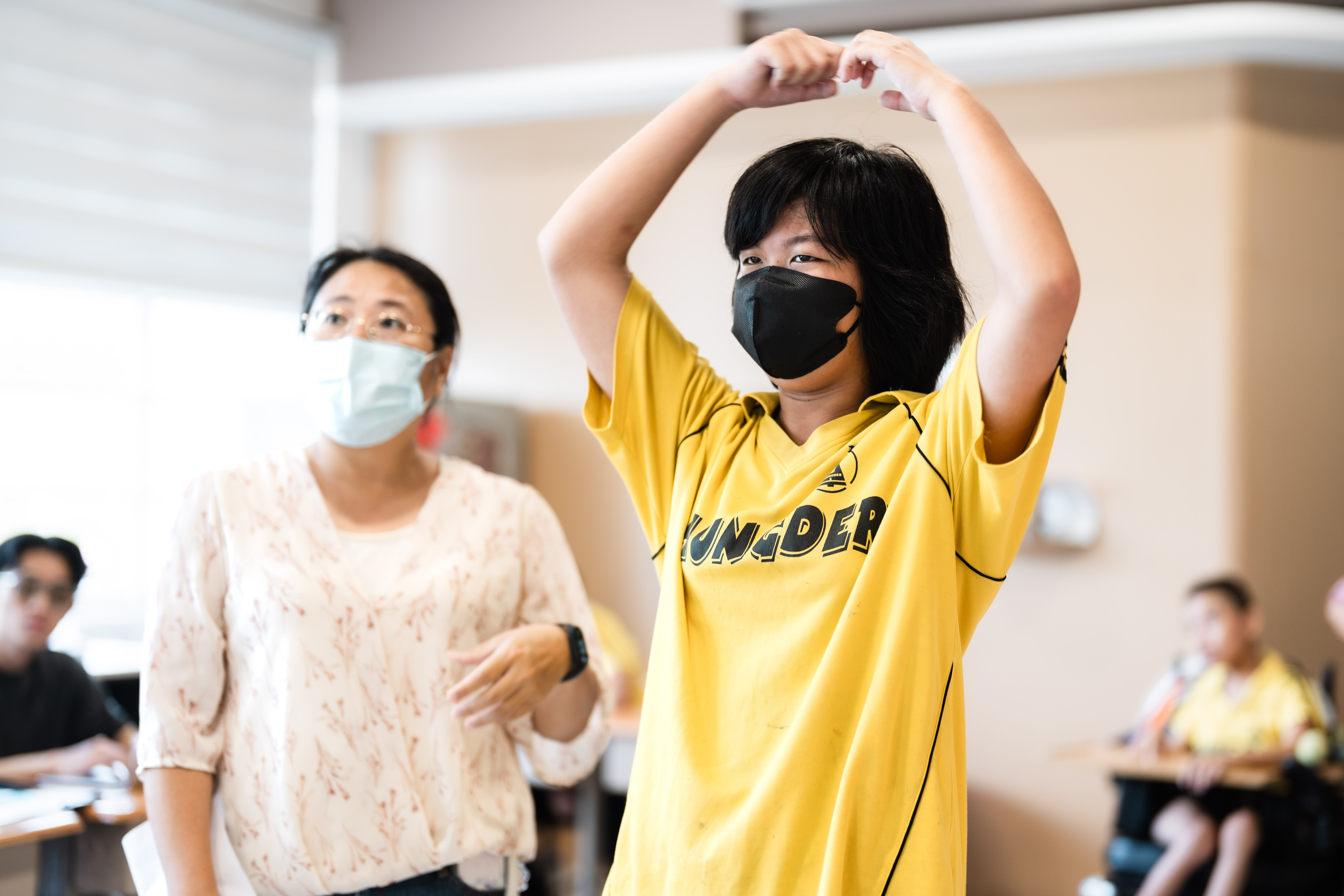
According to research in occupational therapy and special education, physical movements are not only the foundational capability for self-care in daily life, but also an important medium for promoting cognition, sensory integration, and social interaction. Insufficiencies in physical abilities among many students often subsequently affect their daily performance, classroom participation, and learning confidence. Through the design of gamified physical training, students can obtain immediate feedback during movement execution, reinforcing body control and movement coordination, while gradually increasing focus and participation willingness under the accumulation of a sense of achievement. Such design not only supports students' movement learning, but also allows teachers to guide courses in a more strategic and systematic manner.
Technology Supporting Special Education Scenes, Benefiting Both Teachers and Students
This achievement also responds to dilemmas in education scenes. Special education students are diverse in types, and teachers often need to adjust methods immediately during the teaching process but are frequently limited by insufficient teaching staff and resources. Whether in campus special education classes or specialized special education schools, teachers need more flexible and effective tools to support teaching. Human-centered thinking combined with technological application is precisely intended to bridge constraints, helping teachers balance individualized learning and immediate teaching support when facing diverse needs.
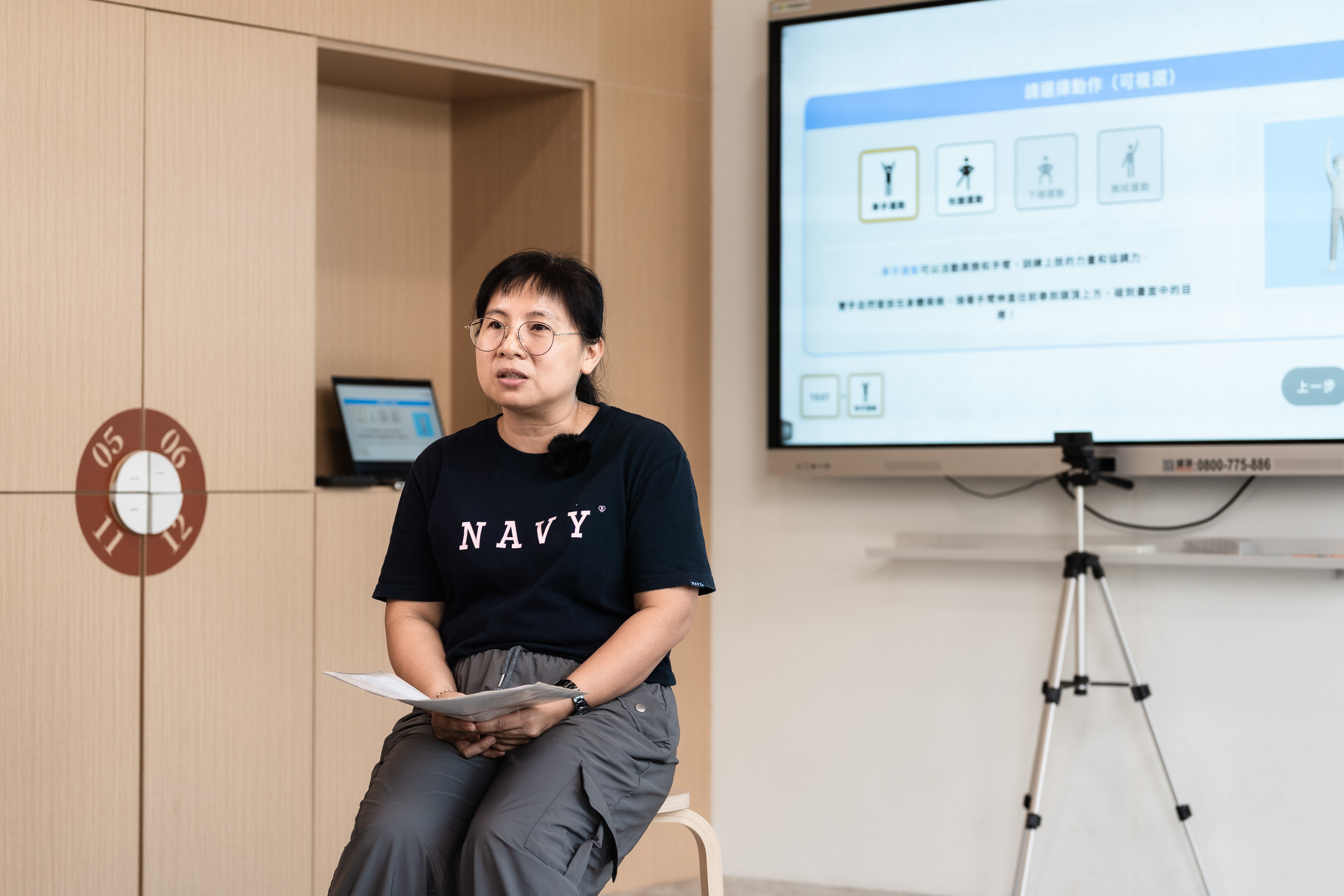
Results after field validation show that students were significantly more engaged and focused during the game process. Low-functioning group students reduced past unconscious movement habits due to focusing on completing tasks; middle-to-high-functioning group students demonstrated higher learning motivation and focus, with participation willingness visibly superior to general courses. Teachers expressed that guiding students into courses through games not only quickly increases participation but also effectively lowers teaching pressure, and the on-site atmosphere is good, making teacher-student interaction lively. This fully displays the supportive effect of this achievement on teaching scenes. This outcome not only demonstrates how design truly brings technology into classrooms, but also proposes a concrete and implementable solution. In the future, the team will continue promotion to inject more innovative energy and possibilities into special education.