Written by / Researcher Hsuan Yeh
Project Introduction
Vinveritas Company is an operator of the T-Bike shared bicycle and Be-Bike shared electric-assisted bicycle systems in Tainan, dedicated to the technological research, development, and operation of shared bicycles, IoT technology research and development, electromechanical integration, and electronic control system research and development. Given that public bicycle-sharing service models and operational mechanisms have gradually matured in urban operations, another major market for self-rental—scenic tourist areas—still consists mostly of private rental operators. Consequently, they frequently face uneven product and service gaps in vehicle quality, pricing, and user experience. Therefore, Vinveritas Company hopes to co-create with a design team, using the Sun Moon Lake Xiangshan Visitor Center as a starting point, to develop a smart rental service system for electric-assisted bicycles. This aims to enhance the user rental service experience, assist the operational end in providing good service quality, and effectively collect experience feedback from the public.
Through the matchmaking and coordination of the Taiwan Design Research Institute (TDRI), Vinveritas embarked on a co-creation project with Vision Design, Cloudfun Information Technology, and Chen Guo Technology. The design team conducted a market context analysis targeting local bicycle rental operators at Sun Moon Lake. They discovered that local rental information was highly complex and disorganized, causing users to face selection barriers whether searching online before traveling or randomly choosing a rental service locally. Therefore, to help users obtain required information more easily, easily identify suitable service plans, and simultaneously allow the operational end to manage effectively, the concept of an online reservation rental Web platform was conceived. The design team also inventoried existing internal technologies and evaluated demands, launching a three-step preliminary design research.
Demand Research
The first step was a user survey. Based on keyword analysis of Google reviews of local bike shops, various experience dimensions were summarized. Field investigations were conducted on-site for cross-reference analysis, categorizing five major user groups: (1) parents with infants/toddlers, (2) parents with young/older children, (3) individuals and elders, (4) couples, and (5) group tourists. Personas were created and drawn into customer journey maps to analyze the emotional pain points of each group. Two major pain points were compiled: selection difficulty and non-transparent information. Aiming at these primary pain points, the team applied targeted solutions, accurately communicating critical information such as various vehicle models and service prices through an easy-to-use online platform design.
The second step was stakeholder interviews. The design team actually visited Sun Moon Lake to interview operators currently renting out bicycles locally, gaining an understanding of key issues with current electric-assisted bicycles, such as the vehicle body being unable to display remaining battery power and the filling out of insurance-related forms being time-consuming and labor-intensive. These key contents will also be included as primary considerations in the subsequent rental platform Web design.
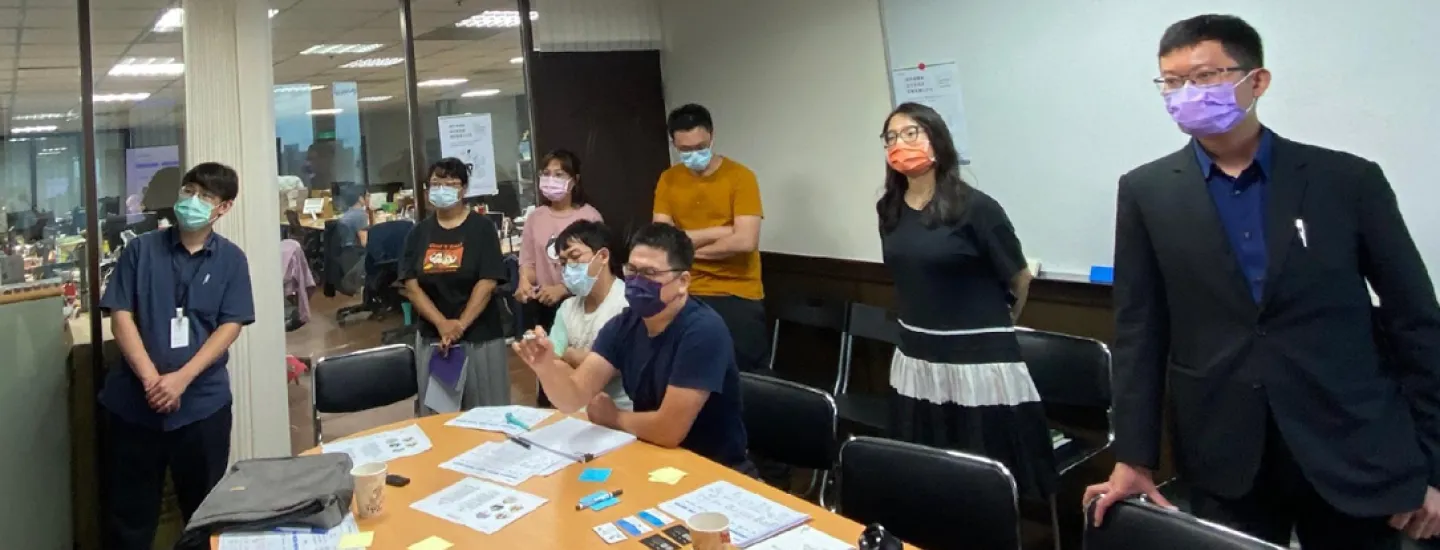
The third step was organizing a service blueprint workshop, inviting core team members: TDRI, the information design end (Cloudfun), the rental operator (Vinveritas), and the field testing end (Chen Guo), to brainstorm design processes. They clarified the service flow, presented it graphically, and estimated the time required for each process, combining and synchronizing for the subsequent overall service design.
Methodology Applied
The foundation for executing this project was established upon the Design Ladder theory of the Danish Design Centre. Traditional or general perceptions of design tend to focus heavily on tangible changes such as appearance and aesthetics. In contrast, the Design Ladder regards design as a progress beyond just styling changes, ultimately transforming design into a tool for internal corporate innovation. This is precisely the core framework and original intention of this project: introducing design into enterprises to create possibilities for industrial innovation.
At the beginning of this project, TDRI distributed pre-test questionnaires to participating and co-creating enterprises to investigate internal innovation conditions, past product and service performances, and development experiences and situations, assessing the status of each enterprise prior to the introduction of design. Following the introduction of design services, participation in each stage was recorded. The following summarizes the records of design introduction into the enterprise for the Vinveritas project.
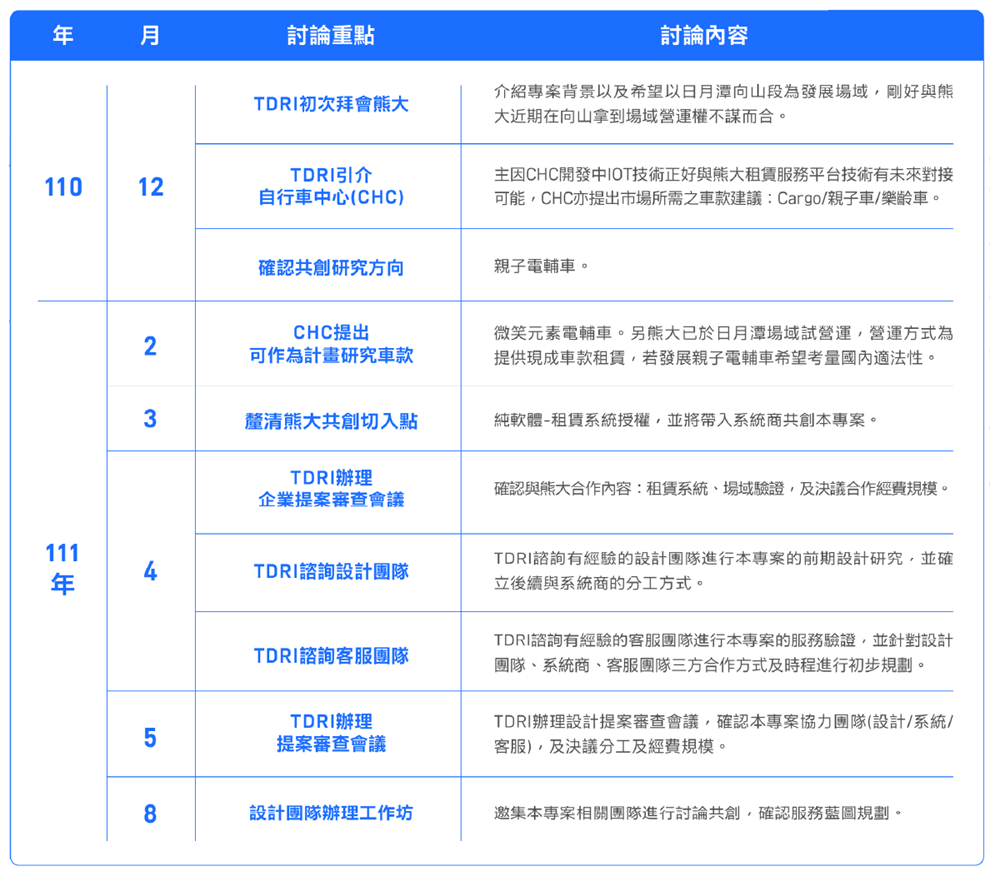
Figure 1: Project Cooperation Mode
Design Outcomes
The UI prototype design for the rental platform Web is based on the user needs from the early research, adopting a minimalist design for the overall style. First, through information system analysis and design, the system management backend items potentially needed for the bicycle rental platform Web were categorized, such as user management and order management. Among these, the system can perform functions like data analysis and statistics, making it convenient for managers to conduct trend analysis. Next, the project proceeded to frontend UI/UX design, which is the system interface, featuring core functions including booking rides, vehicle model inquiries, and order inquiries.
The next stage is user validation. The planned work items are scheduled to include field user services, reservation services, insurance services, and satisfaction surveys, which will be validated within Vinveritas’s existing operational fields. Follow-ups will cross-reference the usage differences between the online rental platform Web and traditional manual interfaces, and propose parts where the online rental platform Web can undergo iterative corrections. It is expected that in 2023, the public will be able to experience this easy-to-operate, convenient rental system at tourist attractions, bringing a new service appearance to bicycle rental operators and providing a high-quality travel experience for the general public.
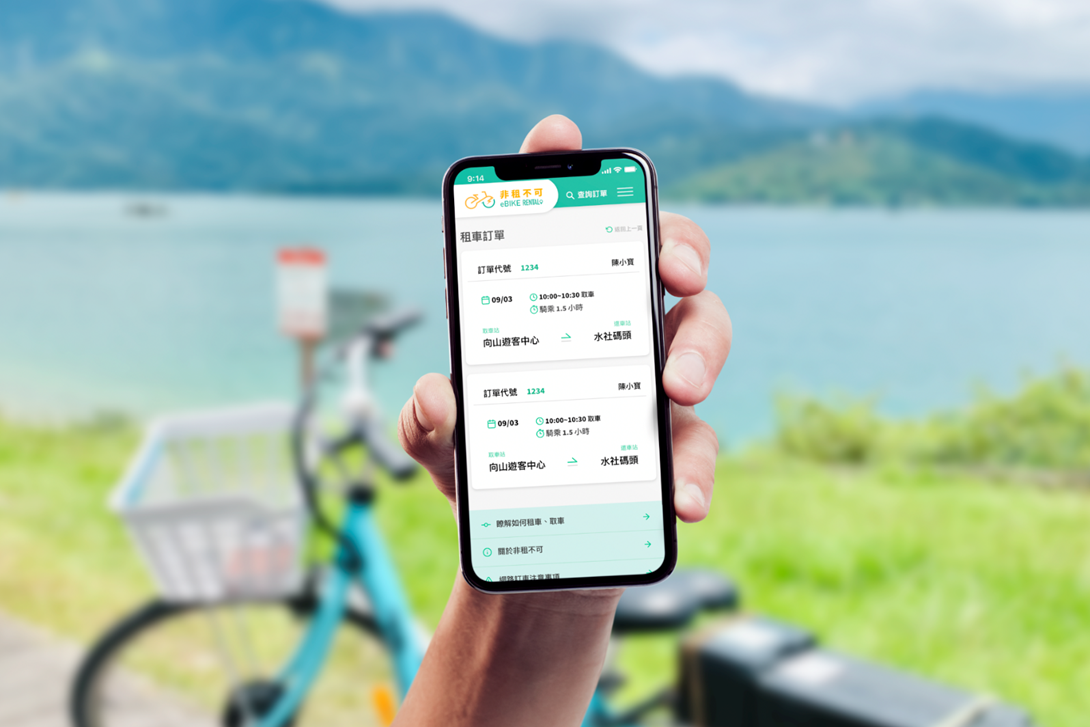
Figure 2: Rental Service Design Outcomes
Cooperation Feedback
Although this stage of the project has not yet conducted a post-test to understand the substantial quantitative benefits after the introduction of design, TDRI conducted effectiveness interviews regarding design introduction with Vinveritas and Vision Design at the end of October to fully grasp enterprises' views on introducing design into development processes, learning about the direct and indirect impacts of this year's technology project in assisting Vinveritas to introduce design capabilities.
Among them, Vinveritas stated that before knowing design, they purely engaged in commercial behavior and did a good job in customer service. However, after meeting Vision Design, they began to feel that design could be incorporated into the company's business strategy, using design as a guideline for company management. They also felt that the co-created outcomes were better than imagined, strengthening the vivid impression of the Vinveritas rental bicycle brand end, and taking this opportunity to understand how design capabilities can help enterprises create brands and influence corporations.
Vision Design stated that before Vinveritas approached them, Vinveritas was already very clear about the direction they wanted. Therefore, they originally thought they would assist Vinveritas from 0 to 1, but it turned out Vinveritas had already completed a considerable degree of market research. As a result, the area where Vision Design could directly assist was pushed further forward, accelerating the co-creation process. Furthermore, through getting to know Vinveritas, they realized that design thinking can also be transformed; not all designs need to be perfect, but can be built upon a “Minimum Viable Product” and lowest-cost experimental service, seeking existence before refinement, and then pushing popular products forward with agile adjustments. This represents another possible appearance of combining business with design.
Reference:
Outcomes of the "Design-Driven Technology R&D and Industry–Research Co-Creation Program” executed by the Taiwan Design Research Institute for the Department of Industrial Technology, Ministry of Economic Affairs in 2022.