Language, Systems, and Cross-Domain: The Core Values of Designers in the AI Era
Facing the accelerating penetration of AI into design work today, the roles and capabilities of designers are undergoing restructuring. Language has become the operating interface of design, and generative AI is no longer just a tool, but more like a neutral collaborator skilled at compiling data. Designers no longer solve problems based solely on intuition and aesthetics; instead, they need to possess the ability to converse effectively with AI, the logic of process disassembly, and systemic thinking frameworks. Future designers will dominate AI through language, retaining control over decision-making, and integrating cultural, social, and technological knowledge to become true cross-domain practitioners.
People × Machine × Field: Rethinking Design Education
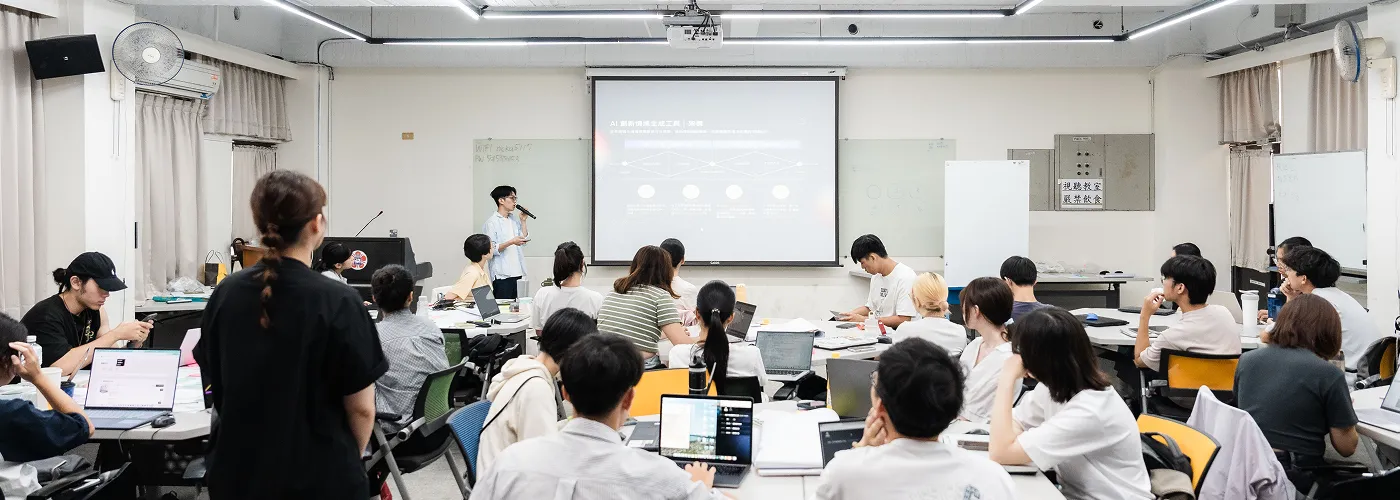
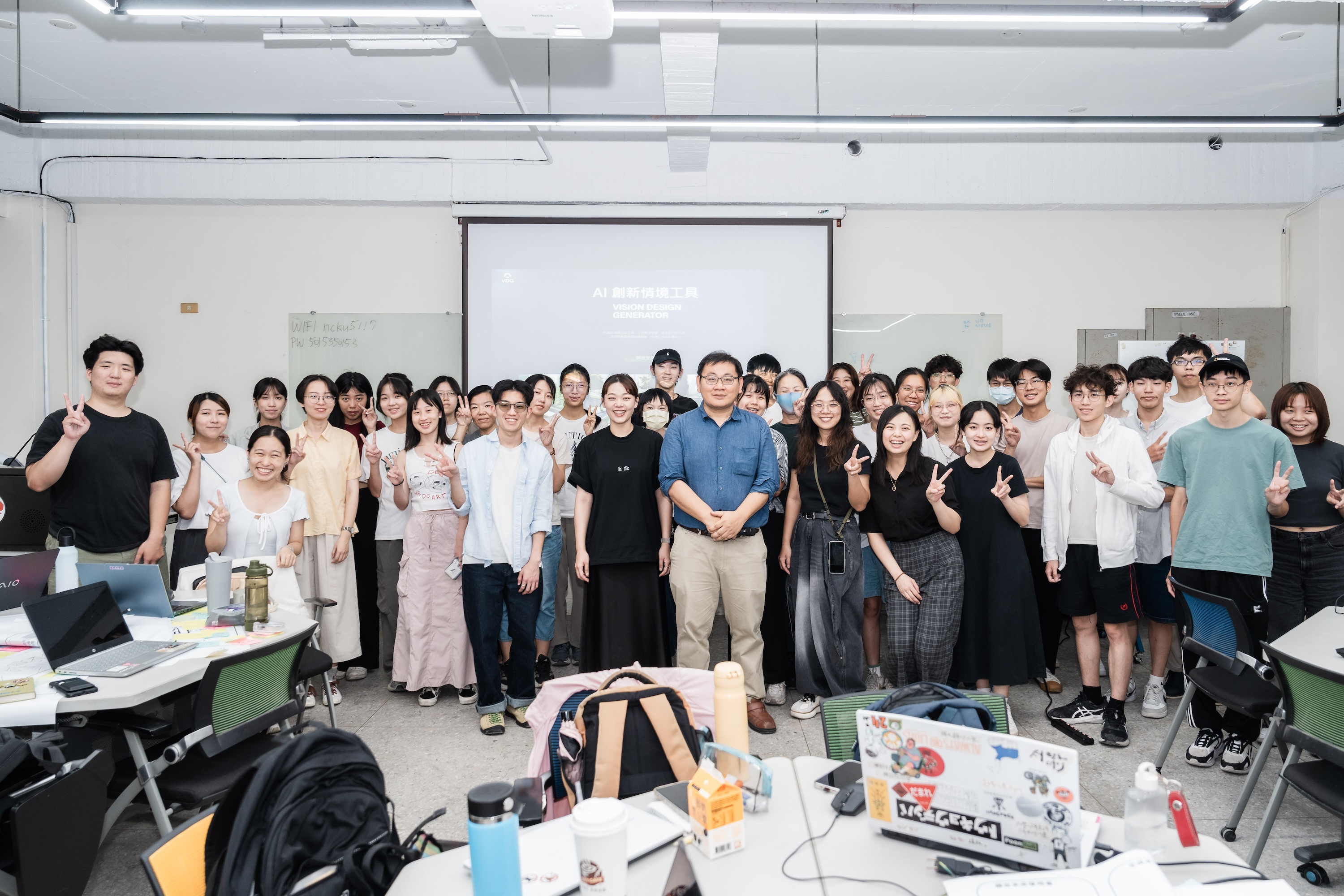
As generative AI transforms creative production processes, design education faces challenges: How should designers collaborate with AI? What constitute human capabilities that cannot be replaced? This AI digital tool application workshop was a practical course jointly curated by Professor Chia-Han Yang, Chairperson of the Institute of Creative Industries Design at National Cheng Kung University, and TDRI’s Design R&D Section, focusing on the integrated application of future topics, user needs, and AI tools. Set against the backdrop of simulating future social scenarios and combined with field observations and systematic tool operations, the course emphasized cross-domain cooperation, scenario construction, and prototype practice. It did not pre-establish a single answer, but allowed participants to experience the possibilities of human-AI collaboration within real contexts through repeated practice and discussion.
Creating Dialogue, Not Just Creativity
Taking the scenario-based thinking of futures studies as a starting point, this workshop led participants around three major themes: "Future Campus," "Future Community," and "Future Silver-Haired Park." From the perspective of users, they constructed scenarios, identified needs, and developed design concepts responding to future challenges. Design is not just creative output, but a process of successive dialogues centered on real topics, allowing creativity to possess a temporal and social positioning.

Tools as Collaborators, Not Replacements
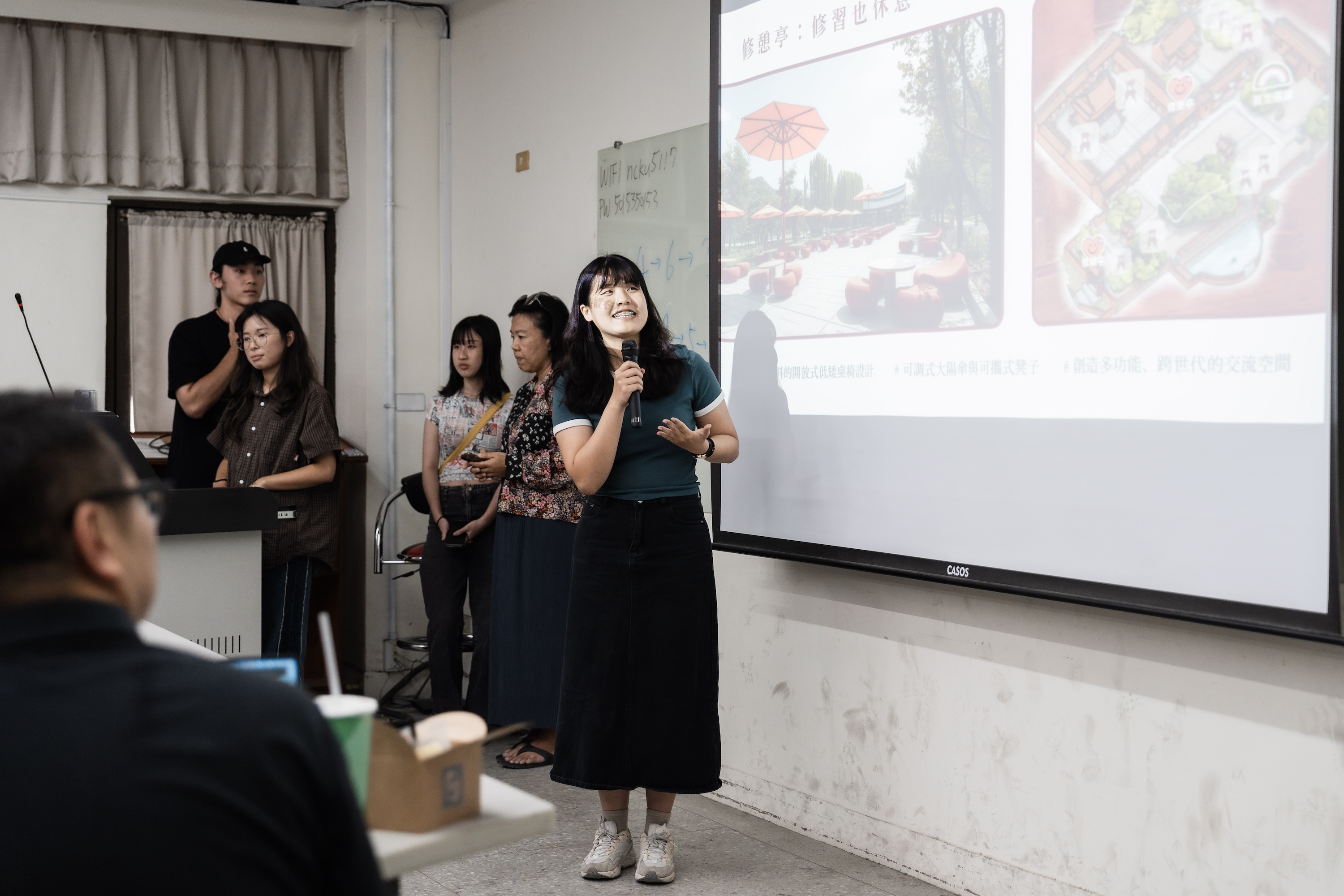
As teams walked into the Tainan Confucius Temple Cultural Park to face the scenario challenges of an aged society in 2030, AI tools served not only as auxiliary instruments for data organization but also became collaborators working side-by-side with designers. They responded immediately to field observations, translated interview segments, transformed field materials into scenario concepts, and assisted teams in turning vague field perceptions into concrete design language.
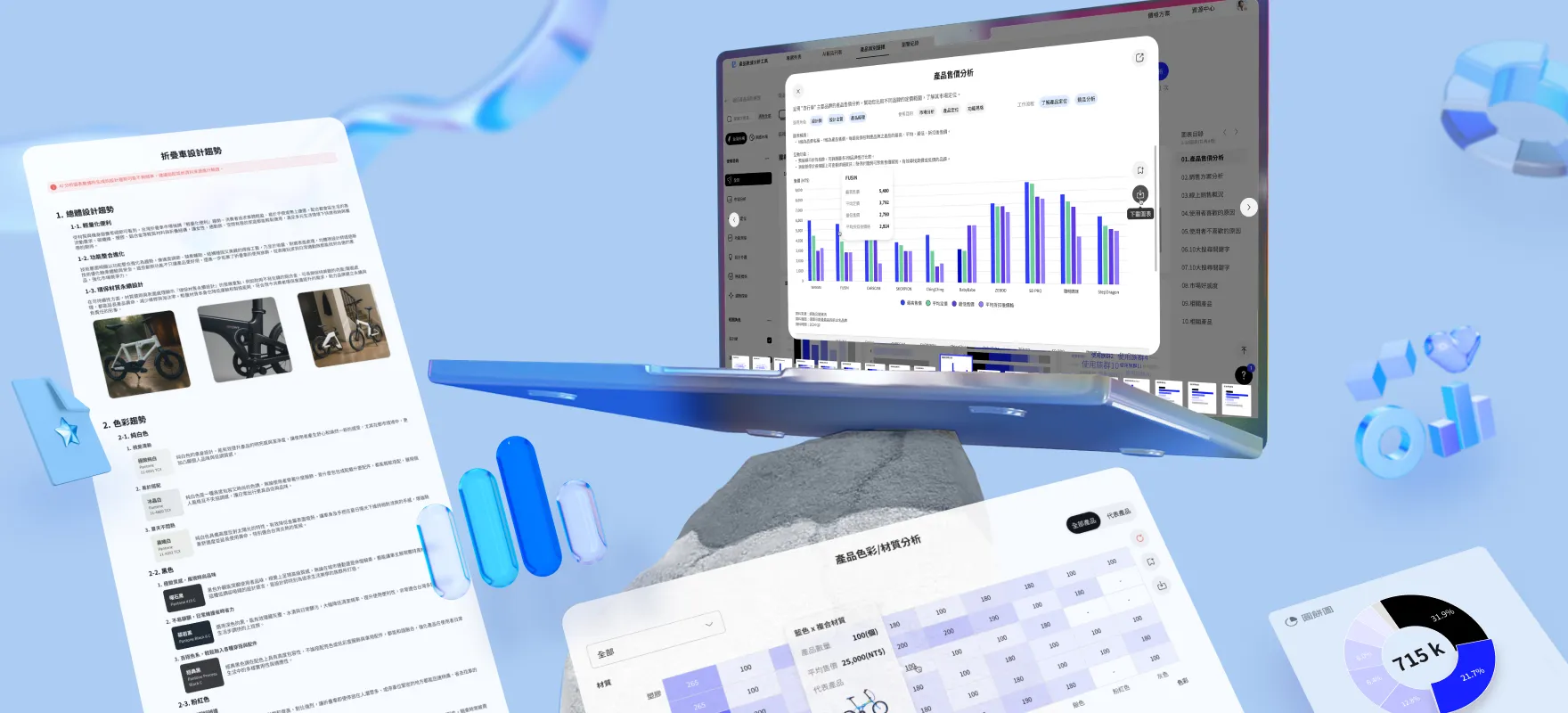
The "Vision Design Generator" played its role precisely within such field interactions. Combining modular design with AI collaboration, it encompasses:
- Depicting Characters: Helping teams understand future users in a structured manner, paired with image stimulation to expand imagination;
- Exploring Trends: Extracting semantic keywords from cases to build extendable design knowledge contexts;
- Ideating Scenarios: Utilizing the POEMS framework to link characters, objects, environments, and values;
- Generating Visions: Turning ideas into reality through AI narrative and visual conversion to facilitate cross-group communication.
This tool demonstrates that AI is not just an accelerator of the design process, but a design partner capable of dialoguing with fields and co-constructing with people. Interweaving the cultural background of the Confucius Temple with aging issues, the AI tool allowed teams to focus on the essence of problems faster while maintaining design logic, context, and creativity amidst shifting information.
Tools as Reflection Engines: A Mirror to the Designer's Internal System
AI collaboration is not merely a tool; it prompts awareness of problems throughout the design process. Through the collision of inspirations and the uncertainty of generation during operation, participants realized which problems could not be automatically handled by tools and which logic relied on human judgment and interpretation, thereby forming an understanding of what tools "can do" and "fail to do." In the reflections at the end of the course, participants generally mentioned that:
- Although tools can assist in rapid visualization and scenario layout, they cannot replace the perception and interpretation of field details;
- True creativity still relies on human depth of interpretation regarding relationships, contexts, and values;
- The potential of tools lies not only in production, but in stimulating reflection and reconstruction regarding the essence of design tasks.
These observations were also reflected in imaginations of future tool features, such as more open user editing permissions, recommendation capabilities that better understand local contexts, or processing modules capable of further linking multimodal data within the design process.
The Evolution of Design Value: Co-Constructing Thinking Frameworks with Tools
During the practical process, participants viewed the Vision Design Generator as a part of design literacy, which concerns not just "what to use" but also "how to use it," "why to use it," and "how to judge after use." In an AI-driven society, the role played by designers has shifted from creative producers to system builders and knowledge integrators. Tools are not the goal, but mirrors, engines, and co-creation partners. In the near future, the value of design will manifest in how users expand perspectives, adjust steps, and ask questions anew through tools, ultimately bringing design back to the position of humans and leading toward the future.