Written by / Researcher Ben Huang
The Gap Between Design Research and Decision-Making
At product design and development sites, "design research cannot make it in time" is almost a common pain point for all teams. Design research requires collecting transcripts, organizing data, and then transforming them into personas or user journey maps, which often takes several weeks. However, decisions cannot wait; supervisors push for a presentation next week, and engineers need to confirm features. Consequently, design research often degenerates into a reinforcement rather than the basis for guiding decisions.
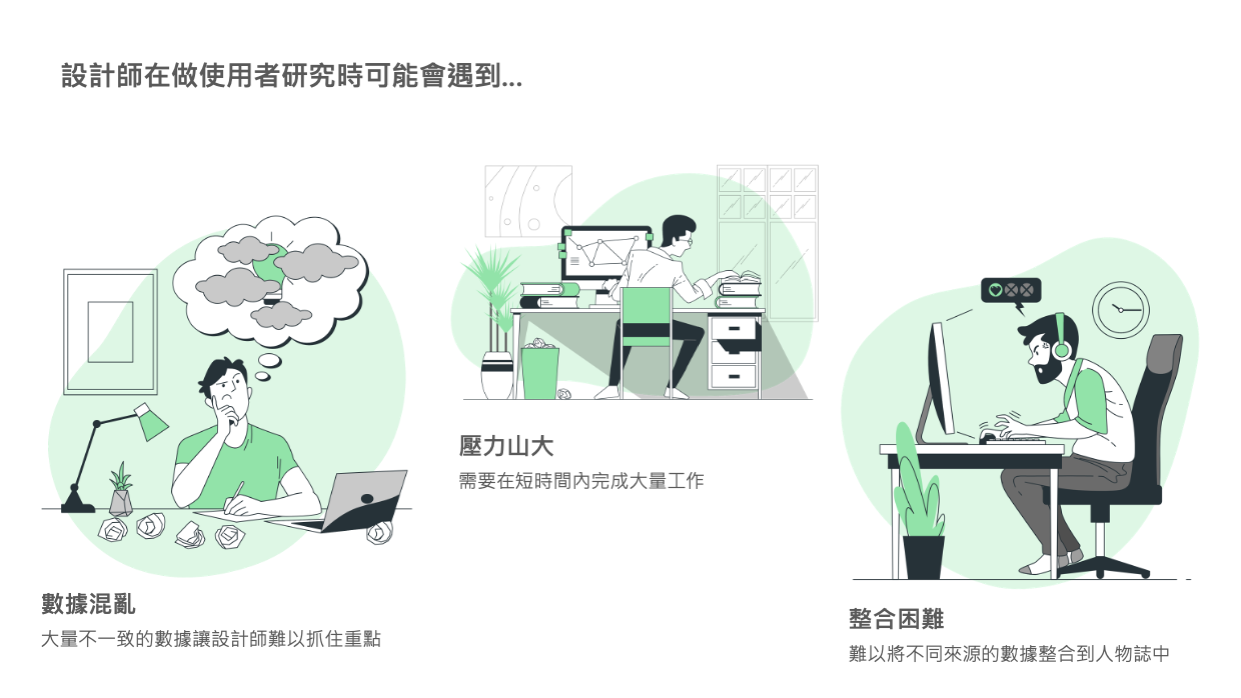
(Source: Drawn by the author)
The Birth of User Data Explorer
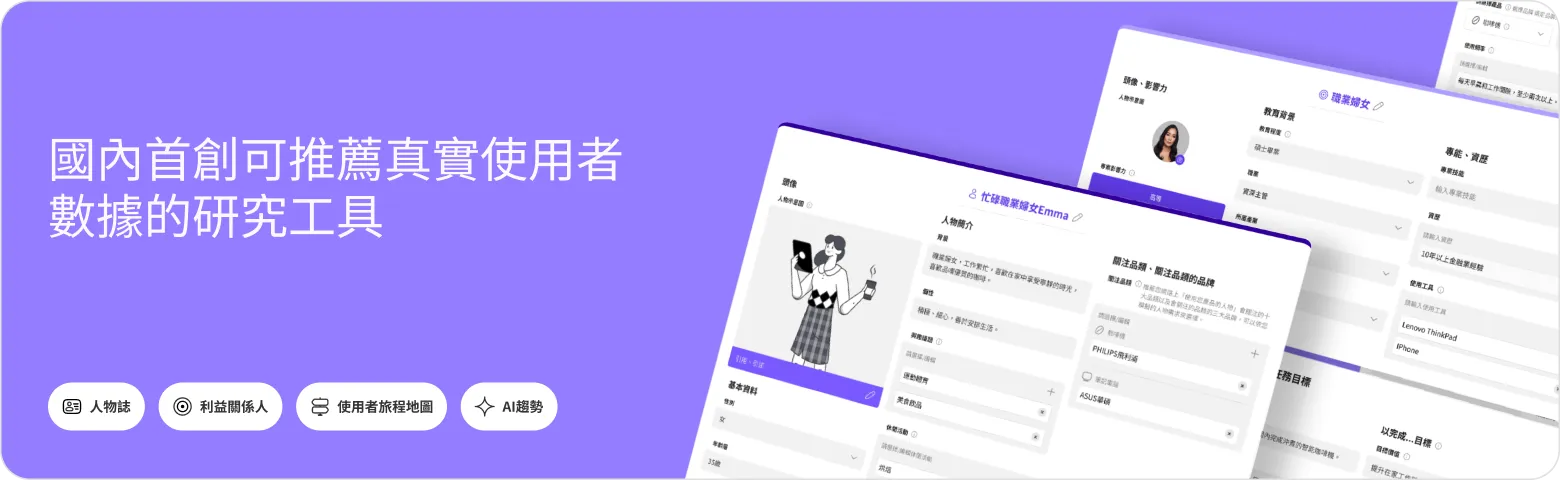
The emergence of User Data Explorer is precisely to solve this contradiction. It is a design research platform that combines real user data with generative AI analysis, assisting designers and product managers in quickly generating design research outcomes. Rather than waiting two weeks for transcript organization, it is better to complete preliminary design research in one to two days and directly export it into a decision-making presentation.
This tool is not intended to replace design research personnel, but to become an "real-time design research assistant" for design and product teams, providing evidence-based market insights at any time during project progression, letting design research stay ahead of decisions.
Real Data: Personas No Longer Imagined Out of Thin Air
In the past, personas were mostly deduced by designers based on experience, lacking sufficient data support. But in the User Data Explorer, the foundation of personas comes from publicly visible user comments and further combines online public opinion data.
Users can not only review standardized comment summaries but can also see issues generally concerned by users of certain product categories, preferred categories and brands, and even common lifestyle habits and leisure activities through charts generated by the system. These public opinion data allow design research personnel to describe characters more comprehensively, extending beyond product usage scenarios into daily needs and values.
In other words, personas are no longer just "characters on paper," but three-dimensional figures combining comments and public opinions, which can more realistically reflect market trends and user behaviors.
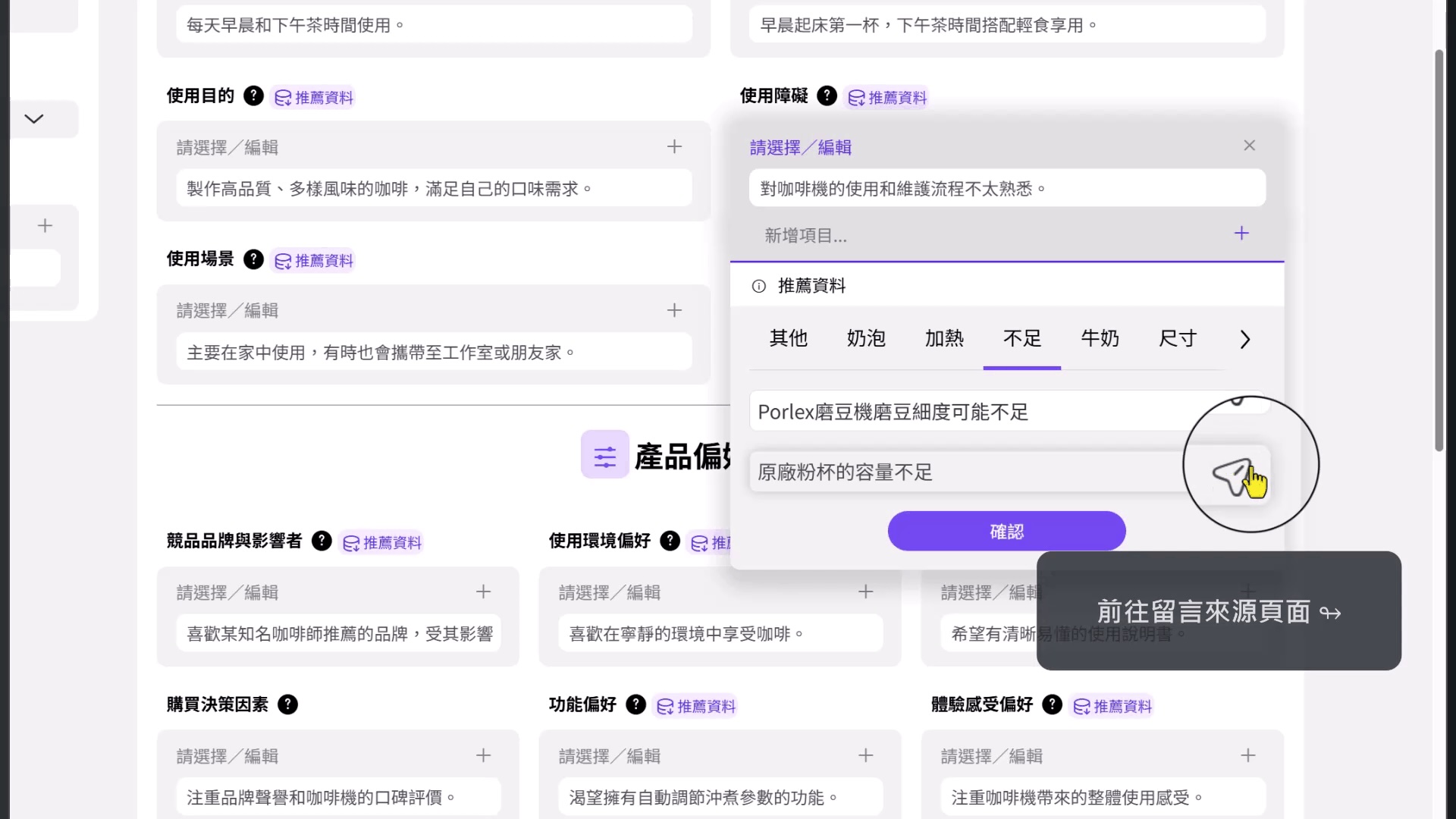
(Source: Partial screenshot of this tool)
AI Auto-Generation: A Leap in Design Research Speed
In addition to data sources, another core is generative AI. Users only need to enter a project description, and the AI can generate personas, user journey maps, and stakeholder maps. If there are transcripts, simply copy and paste them, and the AI will automatically extract needs, pain points, and emotional curves.
Transcript organization that used to take a week now takes only a few minutes. Design research personnel and designers can spend more time on "interpretation and strategy" rather than being trapped in tedious data induction.
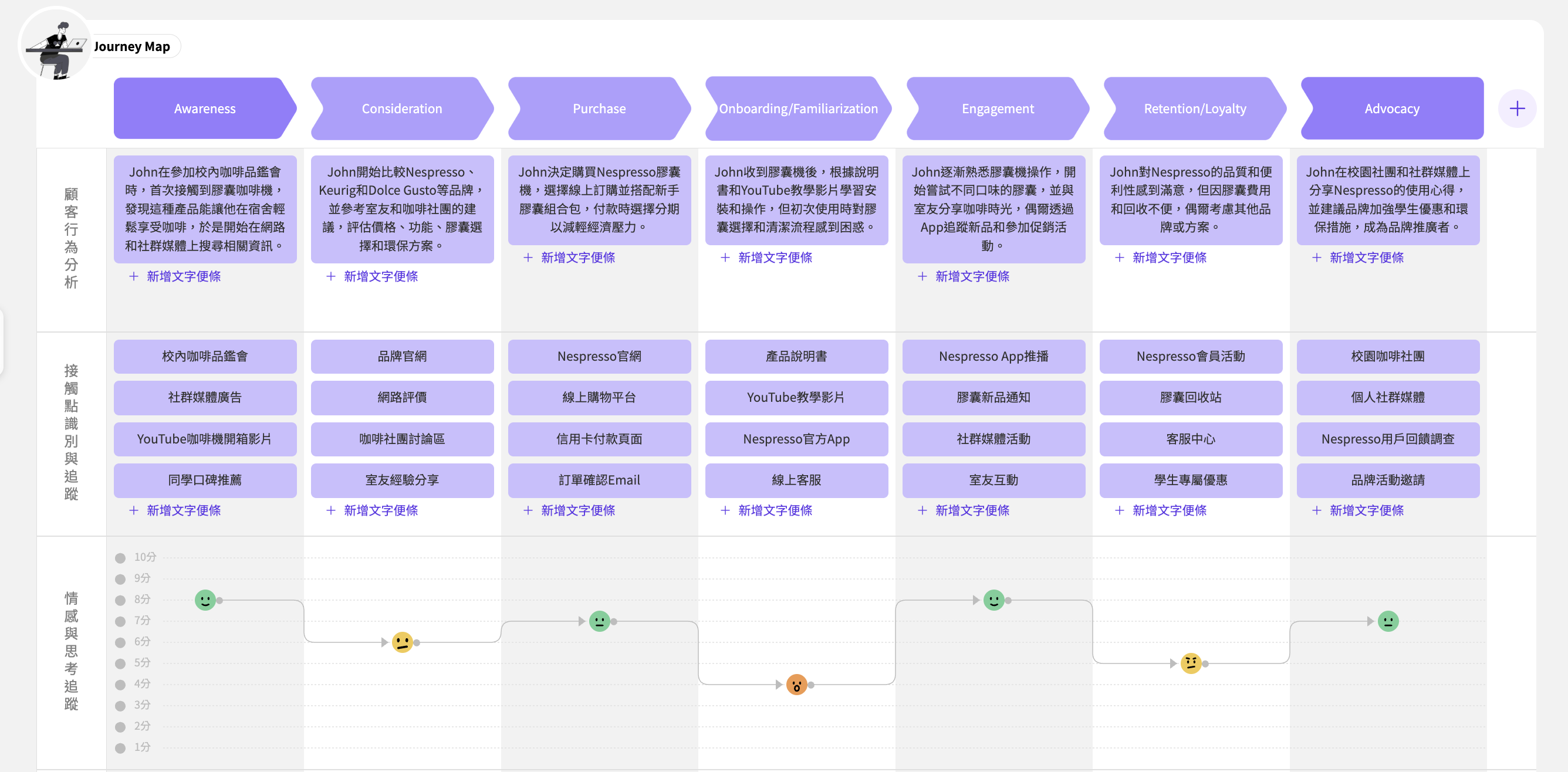
(Source: Partial screenshot of this tool)
One-Click Export: Design Research Outcomes Become Decision-Making Tools
After completing the three major modules, the system can automatically export a complete project report, with content including:
- Project background and summary
- User needs and pain points analysis
- Stakeholder distribution map
- Design opportunity points and strategic recommendations
This report is not just a design research record, but a decision-making tool that can be directly put into presentations and brought into meetings. The clear structure helps different departments quickly build consensus, letting design research no longer stay in documents but enter the decision-making table.
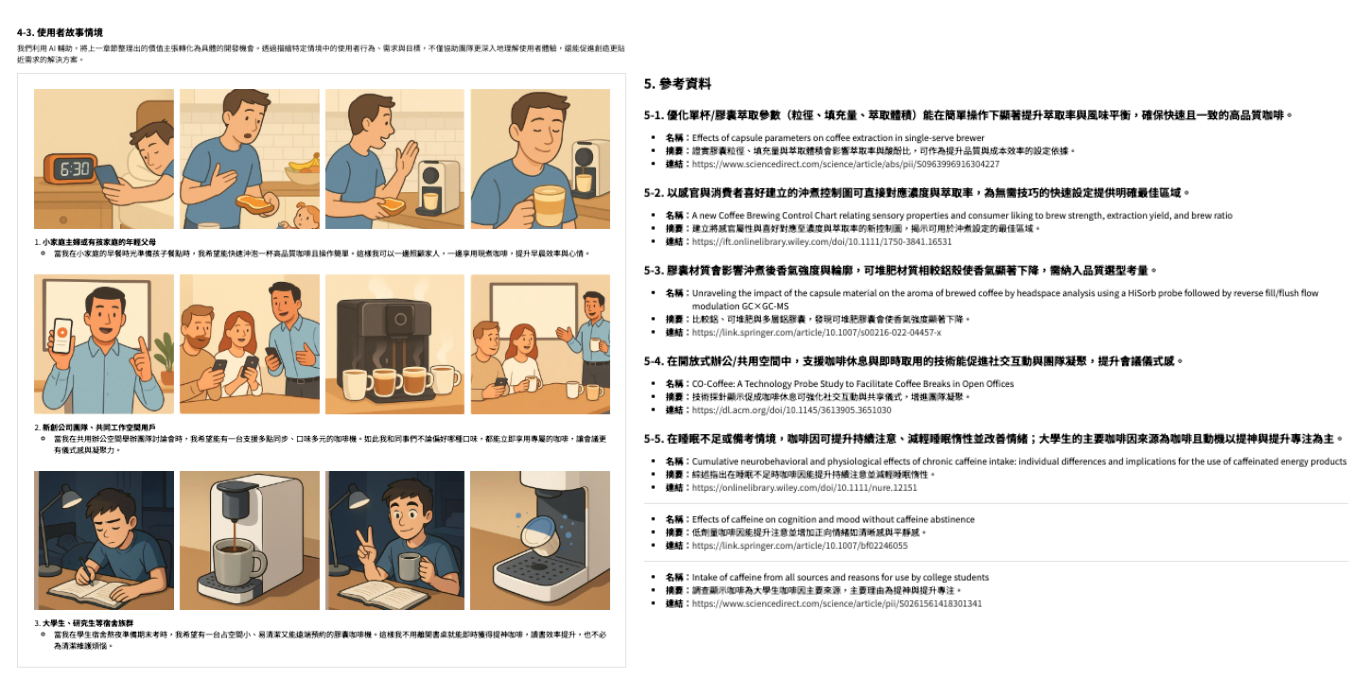
(Source: Partial screenshot of this tool's report)
Usage Scenario: A Day in the Life of a Designer
Take a product manager planning a smart coffee machine as an example:
In the morning, he opens the tool, enters the "coffee machine" product category, and immediately sees pain points regarding capacity and cleaning.
At noon, he binds the persona to the journey map and finds that doubts during the purchase stage stem from warranty and maintenance.
In the afternoon, the team confirms through the stakeholder map that retail channels are high-influence roles, deciding to prioritize them in the strategy.
In the evening, he clicks "Generate Report," and a complete project analysis is completed within a few minutes, which can be brought into the meeting the next day.
A process that used to take two weeks now only takes one to two days. Moreover, these insights are not "intuition" but supported by real data.
The Value of the Tool
After practical application, the tool demonstrates three significant values:
- Efficiency enhancement: The design research cycle is shortened from several weeks to a few days.
- Design research becomes more authentic: Based on comments and public opinion data rather than hypotheses.
- Decisions become more focused: AI reports become a common language across departments.
Furthermore, it makes design research "more popularized." Even individuals without a design research background can quickly build personas and design research reports through the intuitive interface and AI assistance, allowing more roles to participate in the design research process.
FAQ
Q: Which roles are suitable to use it?
Product managers, designers, user researchers, and even startup teams can use the tool to quickly locate needs at the early stage of a project.
👉 Reminder: The tool is suitable for "early-stage design research" and "rapid iteration." If you want to perform product launch validation or deep human factors design research, you still need to pair it with project-based design research methods.
Q: Is a design research background required?
No. The interface design is intuitive, and with the AI-assisted generation feature, even those without design research training can quickly complete design research templates.
👉 Reminder: For design research novices, AI is a good helper, but it still relies on team experience to judge which content should be adopted and which needs adjustment.
Q: What is the difference from traditional design research?
Traditional design research relies on manual collection and induction, which is time-consuming and easily influenced by subjectivity; this tool combines real data with AI to automatically generate outcomes, significantly improving efficiency and precision.
👉 Reminder: This is not an "either-or" choice. The best practice is to use the tool as an accelerator to quickly validate hypotheses, and then use traditional design research methods to deepen insights.
Q: Can design research outcomes be directly used for presentations or project proposals?
Yes. The project reports exported by the tool have a complete structure, including summaries, needs, pain points, and strategic recommendations, which can be directly incorporated into presentations, saving a lot of time on organization.
👉 Reminder: Analysis content generated by AI may still carry biases. It is recommended to review and supplement it before presenting to ensure it aligns with the project context and decision-making needs.
Q: Can this tool replace traditional user interviews?
It will not completely replace them. It can quickly provide a design research foundation based on real data, allowing the team to find directions faster in the early stage of a project, but it is still recommended to pair it with interviews and testing to obtain deeper insights.
👉 Reminder: Especially on high-risk or high-value projects, design research methods that interact with real users remain indispensable.