
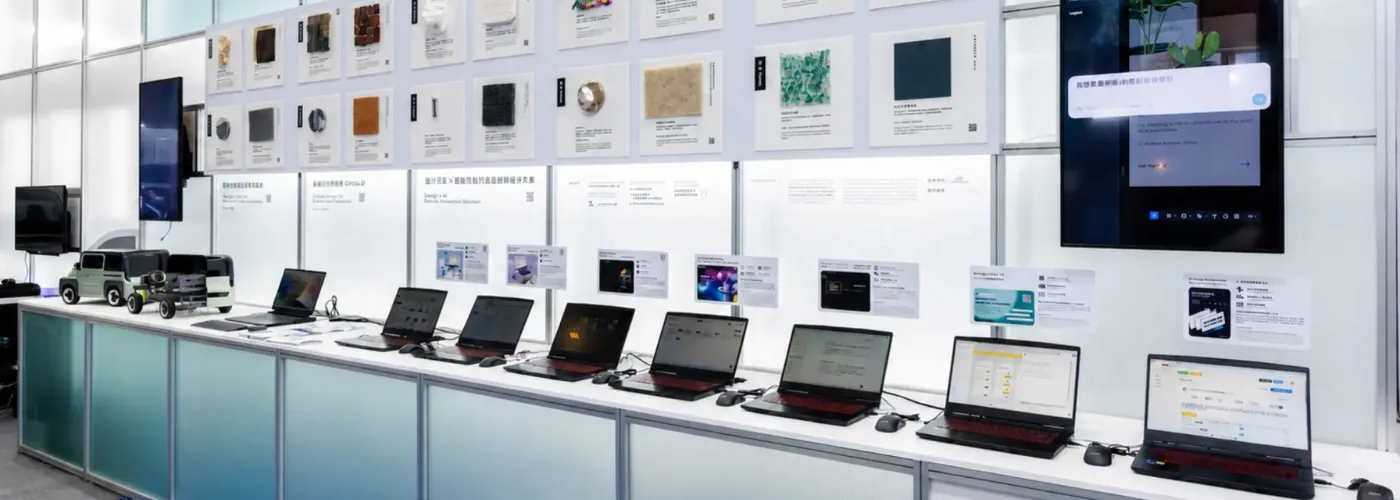
Design, at its best, has always been a discipline rooted in adaptation. Today, as the design profession grapples with the accelerating pace of digital transformation and the rise of Generative AI, designers are being asked to do more than simply adopt new technologies. They are being required to adapt proactively and cultivate the specific tools and mindsets necessary to rethink their workflows and build entirely new forms of professional resilience.
For WDO Promotional Member Taiwan Design Research Institute (TDRI), that challenge became the starting point for a multi-year effort to develop AI digital design tools that help designers respond to change without losing the critical judgment, contextual understanding and human insight that define the profession.
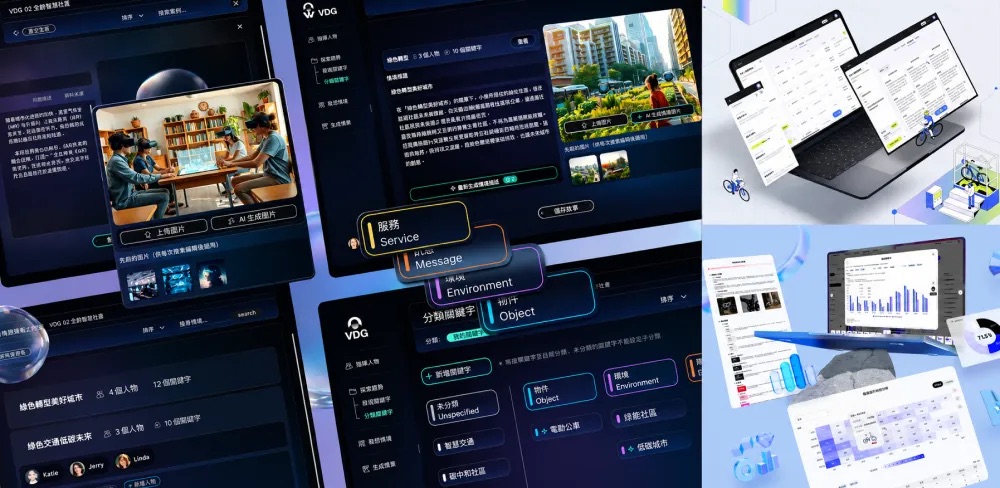
TDRI’s AI digital design tools bring together scenario generation, structured data and workflow support in a growing design ecosystem. Photo credit: TDRI
At the centre of this effort is TDRI’s Design R&D Lab, a platform created to connect design research, trend analysis, co-creation methods and digital tools. The Lab was established to help designers, companies and institutional partners identify needs earlier, structure knowledge more effectively and uncover new opportunities for innovation through design.
As AI began to transform creative industries at an unprecedented speed, TDRI saw a clear opportunity: rather than treating AI as a generic, external tool, it could be deliberately shaped through design methods and integrated into design workflows in more meaningful, contextualized ways.
This philosophy became the foundation of the AI DIGITAL DESIGN TOOLS project, developed by TDRI’s Design R&D Lab with support from the Department of Industrial Technology (DoIT) of the Ministry of Economic Affairs. In its initial four-year phase, the project focused on turning design methodologies into structured digital assets that could support the research and strategy stages of design work. These included tools such as Product Data Explorer, which helps teams analyze product and market patterns, and User Data Explorer, which helps synthesize large volumes of user feedback into personas, journey maps and design insights.
TDRI also expanded its portfolio with tools for future scenario exploration Vision Design Generator and strategy support AI Design Strategy Generation Tool, helping designers explore future opportunities, assess trends and structure proposals more efficiently. Demonstrating the power of domain-specific co-creation, the Lab also collaborated with the Cycling & Health Tech Industry R&D Center (CHC) to develop the Bicycle Design AI Tool, an AI solution designed to support Taiwan’s bicycle industry during early-stage product exploration and concept development.
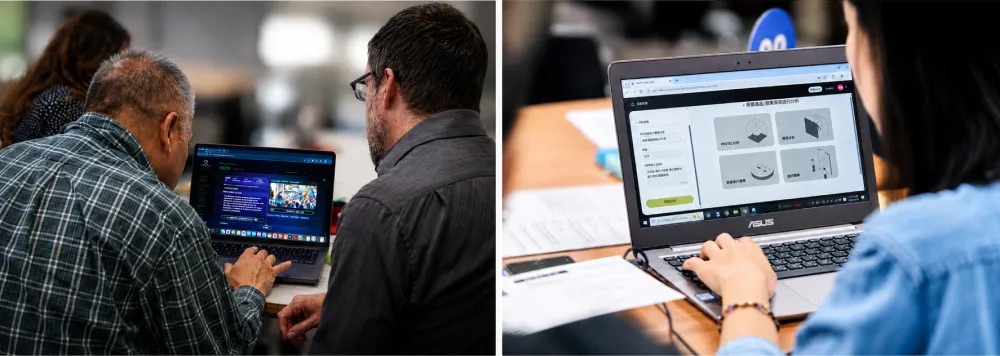
Designers engaging with TDRI’s AI tools during early-stage research and analysis. Photo credit: TDRI
In a design environment increasingly shaped by data, shifting markets and AI-assisted production, what makes this suite of tools especially relevant to professional resilience is not simply execution speed, but their ability to help designers interpret information, make decisions under uncertainty and move between research, strategy and communication with greater confidence. TDRI’s tools are designed to support exactly that: they reduce friction in early-stage analysis, help teams organize knowledge that might otherwise remain scattered and make it easier to translate insight into action.
Internal estimates suggest that these tools can help shorten front-end product development research from 12 months to 8–9 months, while reducing development costs in the product design sector by an estimated 5–10% annually. This direction also reflects what TDRI heard from professionals across different design fields.
Designers do see AI as useful, especially for research, information processing and repetitive tasks, but they do not want it to flatten the deeper value of design.
In fields such as industrial design, packaging and interior design, the real need is not automation alone, but tools that support judgment, contextual understanding and stronger collaboration. That is why TDRI’s next phase is moving beyond standalone applications toward a more integrated approach focused on structured design data, workflow intelligence and modular AI support. This year the initiative enters its second four-year phase and the focus has sharpened to a critical goal: developing application-oriented solutions that solve core industry pain points, helping professional designers build resilience by mastering technological disruption rather than being displaced by it.
That shift matters because resilience in design today cannot be passive survival. It is about building the proactive capacity to work with change productively. It means helping designers remain strategic as workflows evolve, ensuring that design knowledge can be retained and reused, and creating conditions where AI strengthens rather than weakens the role of design in innovation.
In the Taiwanese context, resilience also means enabling designers to extend their role, from producing product or visual outputs to contributing in more strategic, advisory and consultative capacities.
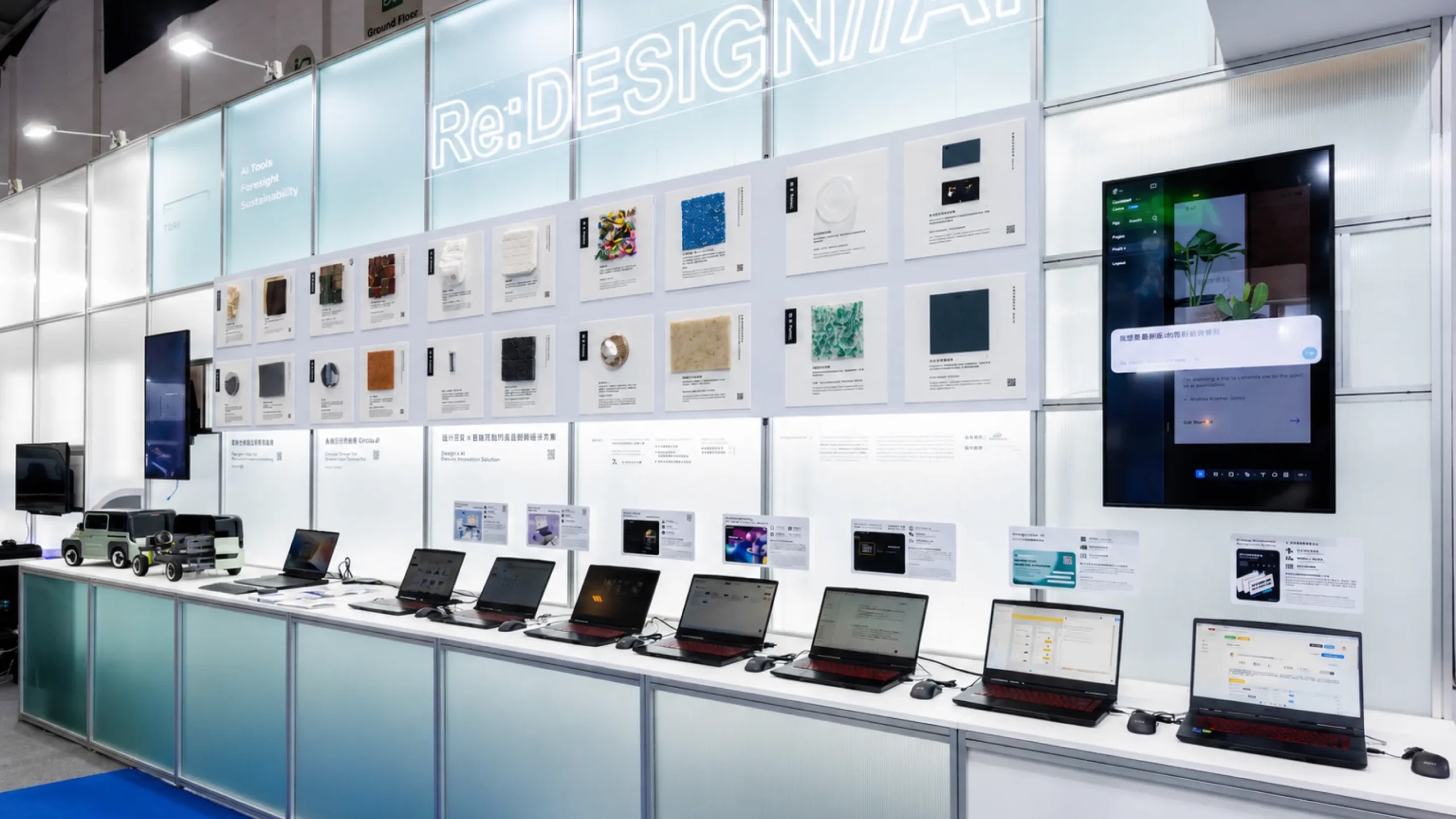
TDRI’s AI digital design tools on display at Computex 2025, where the project was presented to a wider audience of designers, industry partners and technology stakeholders. Photo credit: TDRI
The project’s tangible impact and growing adoption already reflect the success of this vision. Public showcases at major events such as the Young Designers’ Exhibition (YODEX) and Computex Taipei, along with partnerships spanning Taiwanese design associations, technology companies, design firms and universities, point to rising interest in these tools and their practical relevance across sectors. User feedback has further reinforced their value, highlighting how the platforms can quickly visualize complex information through clear charts, reduce the time needed to search for data and develop ideas, and make it easier to outline user profiles and understand trends during early-stage research.
As the project continues to evolve, TDRI welcomes those interested in exploring the tools, exchanging ideas or discussing potential collaboration. Its ambition is not only to support Taiwan’s design sector, but also to contribute to a wider conversation about how designers everywhere can build resilience in an era of rapid digital transformation. To explore the digital design tools, research methodologies, or to connect for future collaborations, please contact Design R&D Lab.
Original article link:https://wdo.org/the-digital-design-tools-powering-resilience-in-the-age-of-ai/


